

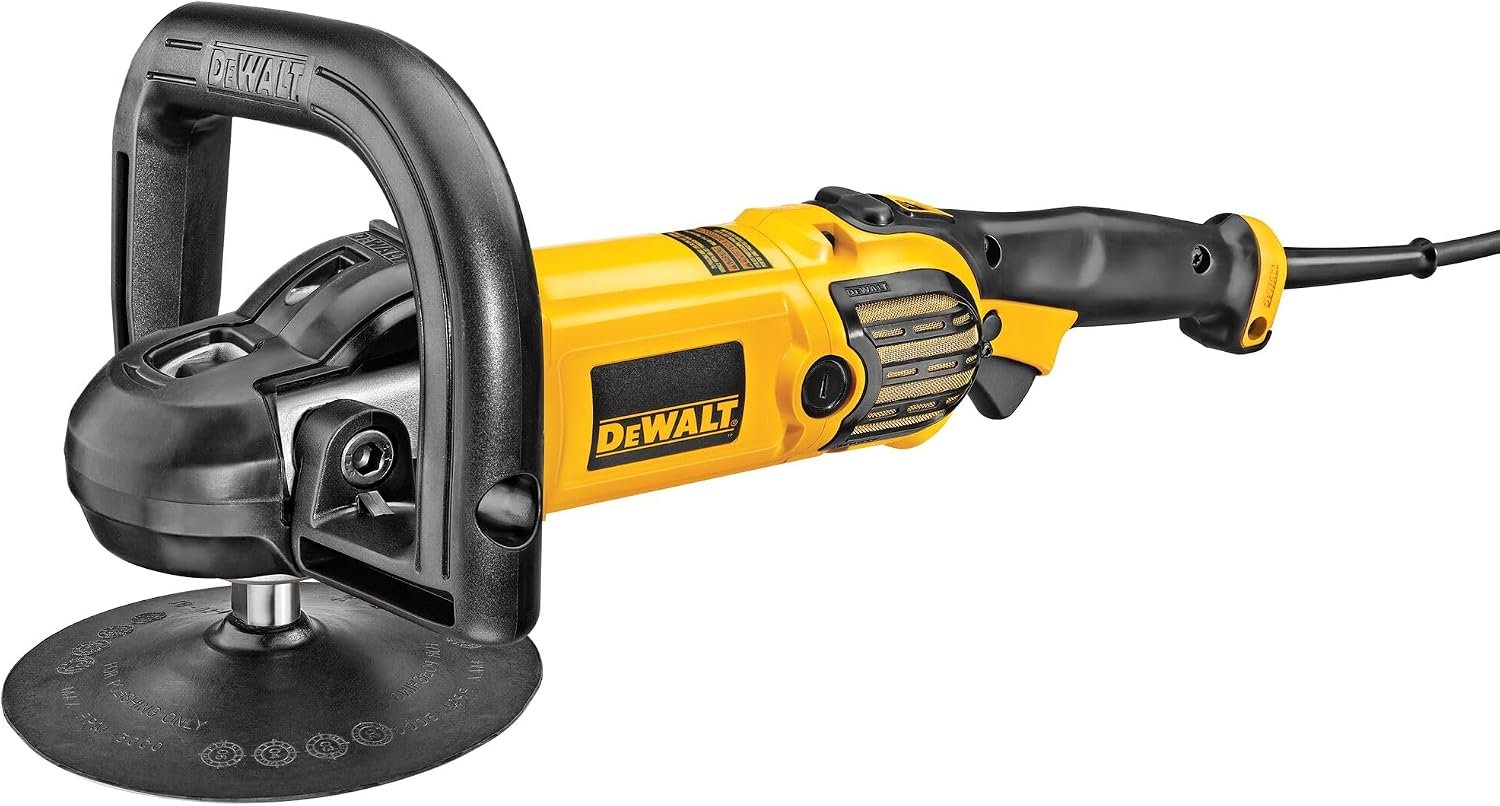
The heavy-duty workhorse of rotary polishers. With its high-torque 12-amp motor and support for massive 9-inch pads, the DeWalt DWP849X gets through large surfaces like trucks, RVs, and boats in record time.It comes fully equipped with both a bale and side handle out of the box and is backed by a generous 3-year warranty.

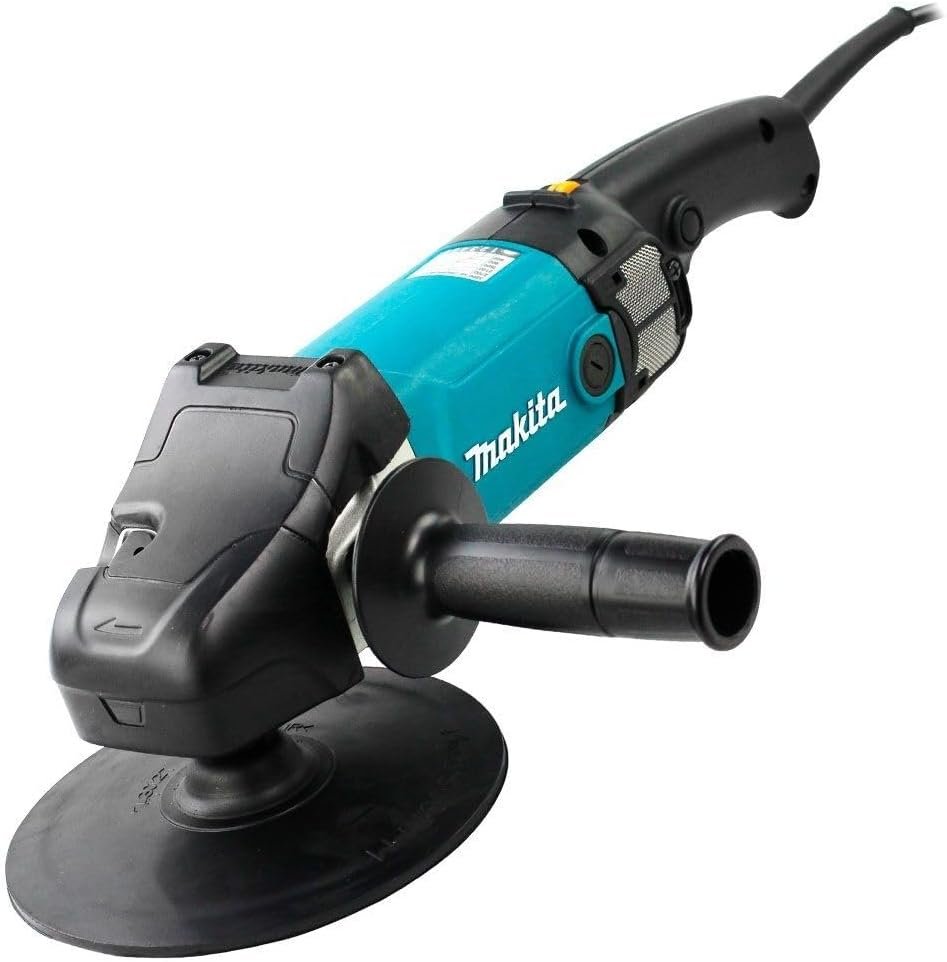
Built for absolute control and fine automotive detailing. The Makita 9237C features a ultra-smooth electronic soft-start system that eliminates sudden speed surges upon startup, preventing pad jump and compound splatter. It features a rubberized nose housing for comfortable, close-quarters panel correction on sensitive automotive finishes.
Introduction
Do you know what’s the biggest mistake I made while buying these polishers?
I treated them like they’re interchangeable tools with slightly different spec sheets.
They’re not.
The DeWalt DWP849X vs Makita 9237C are built around fundamentally different philosophies — one prioritizes versatility and raw coverage, the other prioritizes control and precision — and choosing the wrong one for the way you actually work can cost you a repaint job, an aching wrist, or a polisher you stop reaching for after month two.
This article won’t tell you which one has more amps.
You can find that on a spec sheet.
This article will tell you the things that spec sheets don’t — and that most review sites either don’t know or don’t bother to find out.
Table of Contents
TL;DR
The Makita 9237C wins for precision paint correction thanks to smoother, more consistent RPM delivery. The DeWalt DWP849X wins for large-surface and marine detailing with 9″ pad support, and 3-year warranty. Pick your use case — that’s your answer.
At-a-glance: DeWalt DWP849X vs Makita 9237C
| Features | DeWalt DWP849X | Makita 9237C |
|---|---|---|
| Motor Amps | 12.0 Amps | 10.0 Amps |
| Max Watt Output | 1,250 Watts | 1,200 Watts |
| No-Load Speed Range | 0 – 3,500 RPM | 0 – 3,200 RPM |
| Max Pad Capacity | 7" and 9" pads | 7" max pad size |
| Weight | 6.7 lbs (approx. 3.0 kg) | 7.0 lbs (approx. 3.2 kg) |
| Included Handles | Bale / Loop Handle & Side Handle | Bale / Loop Handle (Rubberized) |
| Startup Behavior | Controlled Finishing System (Soft Start) | Ultra-Smooth Soft Start Electronic Control |
| Debris Protection | Removable Wool Ingestion Shields | Wire Mesh Intake Covers |
| Warranty | 3-Year Limited Warranty | 1-Year Limited Warranty |
| Where To Buy? | Check On Amazon | Check On Amazon |
The Real Difference Between These Two Grinders

When I took both of these polishers out on the shop floor, the difference in how they start up hit me immediately.
I was working on a tricky section of a door panel right next to a sharp body line, where the clear coat is paper-thin and there is zero room for error.
I set the DeWalt DWP849X to a low, gentle speed, placed the pad on the paint, and squeezed the trigger.
For just a fraction of a second, the motor surged faster than the dial setting before settling back down.
It is quick, but when you are holding a spinning pad against sensitive paint, that sudden burst makes your heart skip a beat.
Squirting compound onto the pad made it worse, because that quick speed jump threw tiny drops of white compound across the clean glass and fender before I could even start working the product in.
Switching over to the Makita 9237C on the exact same door panel was a night and day experience.
When you pull the Makita’s trigger, the pad gently ramps up speed like a calm wave, never jumping ahead of the dial setting.
I could place the pad flat against a tight curve, pull the trigger with complete confidence, and know the motor wouldn’t jump or jerk.
The pad stays completely steady against the panel, giving you total command over the pad edge without slinging splatter or stressing over an unexpected surge.
That smooth, predictable power delivery makes long detail sessions far less nerve-wracking, giving you the control you actually need when working on sensitive finish work.
But Wait — What About the Makita’s Infamous Cord Problem?
Before I bought these machines, a friend in the detailing business warned me to stay away from Makita.
He told me his old Makita rotary’s power cord split open right where it plugs into the handle after about a year of heavy shop use, nearly exposing the wires.
That sounded like a nightmare, especially when you are constantly walking around cars and draping the cord over your shoulder to keep it off the fresh paint.
But when I unboxed the newer Makita 9237C, I immediately noticed that the company had actually listened to those complaints and fixed the entire design.
The cord on this model feels totally different in your hands compared to the older versions.
It is noticeably thicker, much more flexible, and features a long, soft rubber boot at the base that bends smoothly whenever you twist or turn the machine.
Over months of dragging the cord across garage floors, tossing it into gear bags, and bending it around body panels, I haven’t seen a single sign of cracking or wear.
It is clear that Makita redesigned this strain relief system specifically to handle real-world shop abuse, taking away one of the biggest headaches older users used to face.
The Pad Size Reality That Changes the Math for Certain Buyers
The real difference in how these two tools fit into your workflow comes down to pad size.
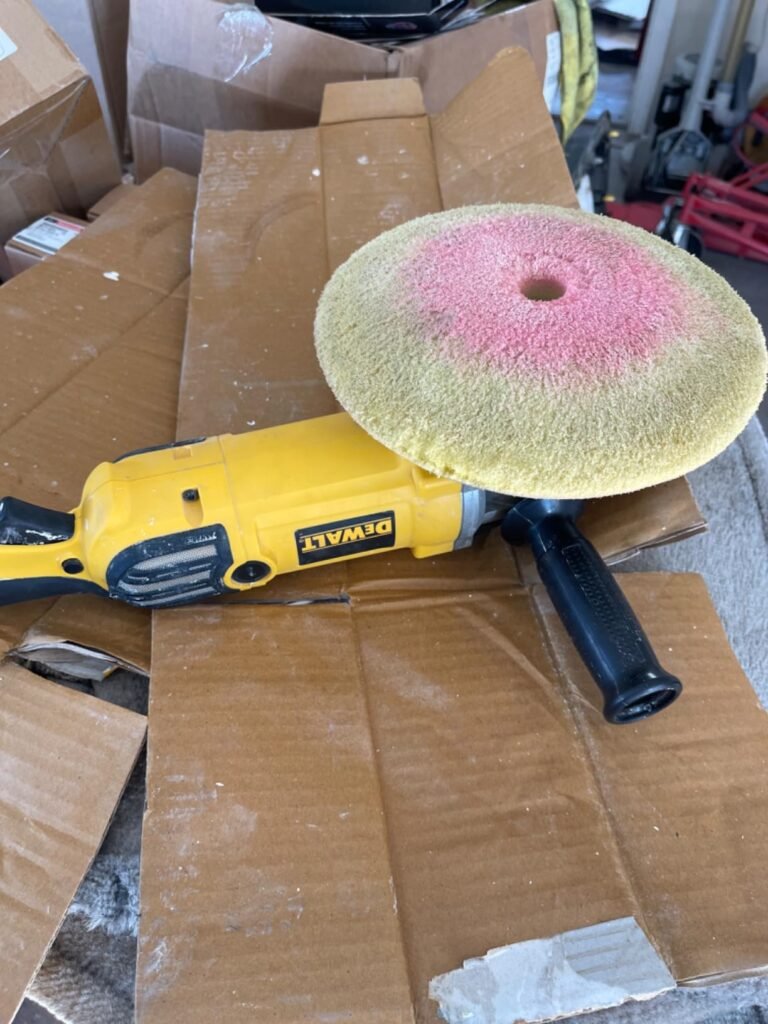
The Makita 9237C tops out at a 7-inch pad, while the DeWalt DWP849X comfortably accepts full 9-inch pads.
That might not sound like a huge deal when you are working on a small hatchback hood, but the math changes fast in the real world.
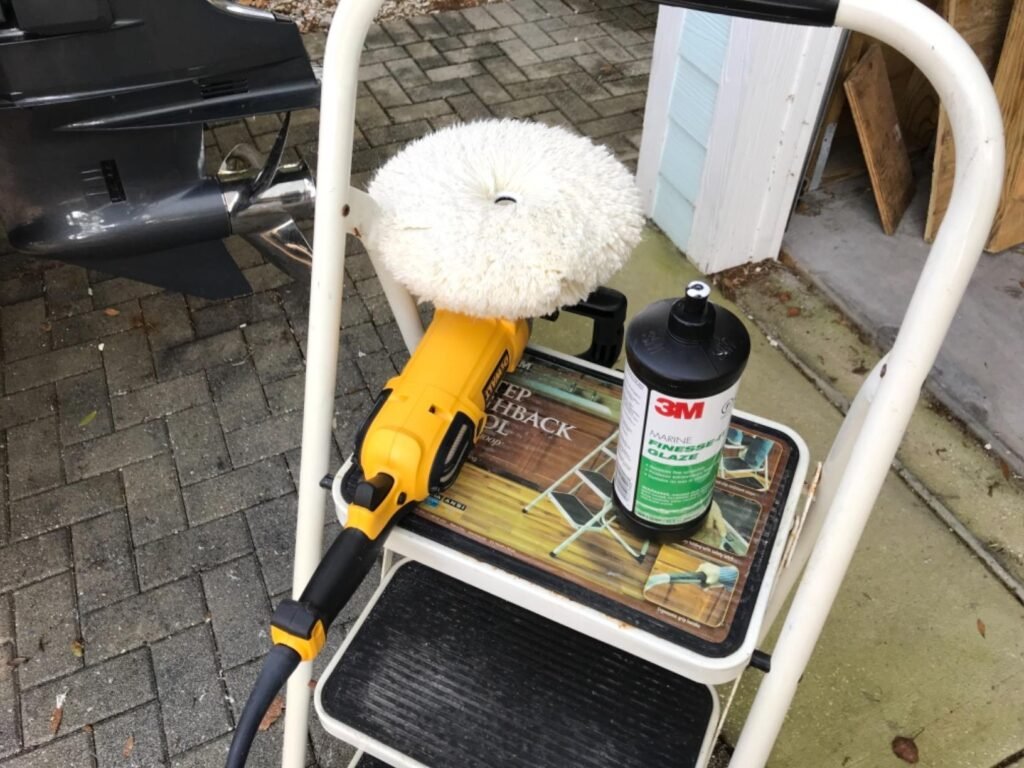
I really learned this lesson while correcting the gelcoat on a 22-foot center console boat in my driveway.
Working with a 7-inch pad on the Makita, the progress felt steady, but the massive fiberglass hull seemed to go on forever.
When I swapped over to the DeWalt with a 9-inch wool pad, the sheer amount of surface area I could cover in a single sweep jumped dramatically.
On long, wide panels or massive truck beds, that larger pad lets you glide across flat sections in significantly fewer passes.
By the time I finished the boat project, using the DeWalt with a 9-inch pad had saved me nearly two full hours of standing in the sun.
If your daily work involves heavy restoration on boats, RVs, or big commercial trucks, the DeWalt’s ability to run bigger pads is a game-changer that gets you off the job much faster.
The Warranty Gap Nobody Talks About at the Point of Sale
When you spend around three hundred dollars on a heavy-duty power tool, how long the maker stands behind it matters more than most people realize.
DeWalt backs the DWP849X with a full 3-year limited warranty, while Makita only gives you 1 year of coverage on the 9237C.
On paper, that gap might look like minor fine print, but inside a working shop, it changes the true cost of owning these machines.
After running both polishers through month after month of heavy compounding and polishing, I realized how much peace of mind that extra coverage provides.
Polisher motors take a beating—heat, compound dust, and constant heavy pressure wear down internal parts over time.
If a switch goes bad or a motor burns out after eighteen months of hard use, repairing it out-of-pocket can easily set you back $80 to $150.
With the DeWalt, you are completely covered through three full years of shop abuse.
With the Makita, any breakdown after month twelve comes straight out of your pocket.
When you factor in those extra two years of protection, the slightly lower price tag on the DeWalt looks like an even bigger bargain for anyone depending on their tool to earn a living.
The Ergonomics Problem (That Becomes Your Problem After Hour Two)
When you look at the specs, both polishers sit right around six pounds, which makes them seem identical on paper.
But weight alone doesn’t tell you what happens to your shoulders, wrists, and back after spending two or three hours bent over a car hood.
How a polisher balances in your hands and lets you adjust your grip is what determines if you finish the day feeling good or barely able to lift your arms.
During long detail jobs, I found the DeWalt’s adjustability made a massive difference in staying comfortable.
It comes straight out of the box with both a classic side handle and a loop-style top handle.
When I was polishing vertical doors, I used the side handle for firm leverage.
When I moved up to the wide, flat roof of a full-size SUV, I switched to the top loop handle to keep my wrists relaxed and naturally guide the heavy machine. Changing positions kept my arms from burning out.
The Makita takes a different approach with its rounder, smooth rubber nose.
It feels fantastic when you are holding it close for tight control or working at chest height, but it offers fewer handle options right out of the box.
After a solid two hours of constant polishing with the Makita without being able to change up my hand positions, my hands and forearms felt much stiffer.
If you are doing long, multi-hour correction jobs where fatigue quickly becomes your biggest enemy, the DeWalt’s built-in handle choices give you a real edge that keeps you working comfortably.
Which On You Should Buy?
Go with the DeWalt DWP849X if:
- You tackle large surface areas: If a good portion of your workload includes boats, commercial trucks, travel trailers, or aircraft, the ability to sling 9-inch wool pads cuts your job time dramatically.
- You want long-term coverage: The 3-year warranty paired with raw 12-amp torque gives you a durable daily driver that will handle tough compounding without burning a hole in your pocket if a part fails in year two.
- You suffer from hand or wrist fatigue: The inclusion of both the bail handle and side handle straight out of the box lets you continuously shift your weight distribution throughout long, grueling sessions.
The heavy-duty workhorse of rotary polishers. With its high-torque 12-amp motor and support for massive 9-inch pads, the DeWalt DWP849X gets through large surfaces like trucks, RVs, and boats in record time.It comes fully equipped with both a bale and side handle out of the box and is backed by a generous 3-year warranty.
Go with the Makita 9237C if:
- Your main focus is high-end auto detailing: When you’re working on thin clear coats, delicate curved body lines, or high-dollar vehicles where a single mistake requires a panel respray, the Makita’s silky-smooth, surge-free startup is unmatched.
- You demand absolute trigger control: The smooth power ramp-up keeps compound splatter off clean glass and panel gaps, making your workspace cleaner and your workflow far more predictable.
- You prefer a sleek, direct grip: If you like resting your hand directly over the rubberized gear housing for close-quarters control on doors and pillars, the Makita feels like a natural extension of your arm.
Built for absolute control and fine automotive detailing. The Makita 9237C features a ultra-smooth electronic soft-start system that eliminates sudden speed surges upon startup, preventing pad jump and compound splatter. It features a rubberized nose housing for comfortable, close-quarters panel correction on sensitive automotive finishes.
Final Take: DeWalt DWP849X vs Makita 9237C
The Makita 9237C is the better machine for precision paint correction. If you’re the kind of detailer who works by the micron, values consistent motor behavior, and has graduated from thinking about price to thinking about results, the Makita earns its premium.
The DeWalt DWP849X is the better machine for coverage, versatility, and large-surface detailing. If you’re working in a production environment, detailing large vehicles or marine craft, or building out a professional kit where the 3-year warranty is a business consideration, the DeWalt delivers everything you need.
The article you were looking for wasn’t one that told you the Makita has 10 amps and the DeWalt has 12. It was one that told you why the startup behavior of your polisher could matter more than either of those numbers — and gave you enough context to actually make a decision you won’t regret in six months.
Related Articles:
FAQs
Q: Is the Makita 9237C worth more than the DeWalt DWP849X?
Yes — if precision paint correction is your priority. No — if you work on large vehicles or need longer warranty coverage.
Q: Does the DeWalt DWP849X really have an RPM overshoot problem?
It’s a real quirk documented by multiple professional detailers. The motor briefly spikes past your set speed on startup before settling. It’s manageable for compound work but risky for fine paint correction.
Q: Which is better for beginners?
Neither — both are professional rotary polishers, not dual-action machines. If you’re new, learn technique first. If forced to choose, the Makita’s smoother power delivery is slightly more forgiving.
Q: Did Makita fix the cord fraying problem on the 9237C?
Yes. The cord issue was a 9227C problem. The 9237C was redesigned with a more flexible cord and improved strain relief specifically to address it.
Q: Which polisher is better for boats and large vehicles?
DeWalt DWP849X — its 9″ pad compatibility gives a significant coverage advantage over the Makita’s 7″ max.
Q: Which has the better warranty?
DeWalt wins clearly — 3-year limited vs. Makita’s 1-year. For professional use, that gap is real money.