

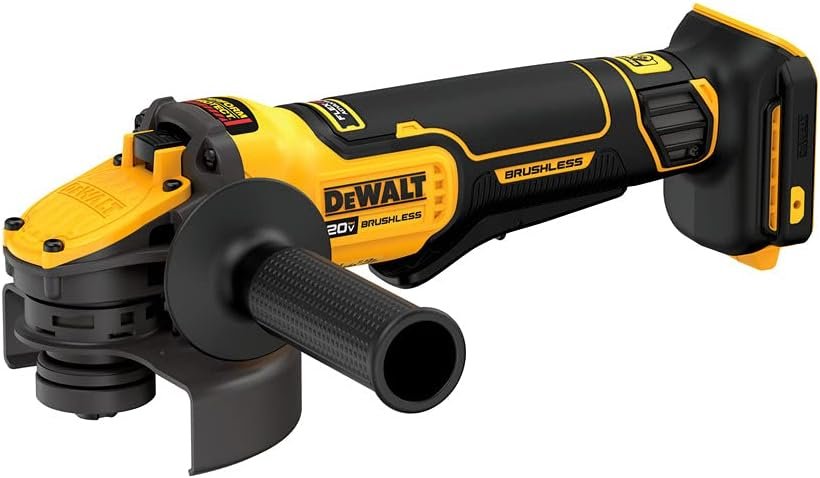
A compact brushless grinder that runs on standard 20V MAX batteries and gets a power boost from FLEXVOLT packs. Six speed settings suit grinding, brushing, and polishing, and Kickback Brake and E-CLUTCH add protection if a wheel binds.

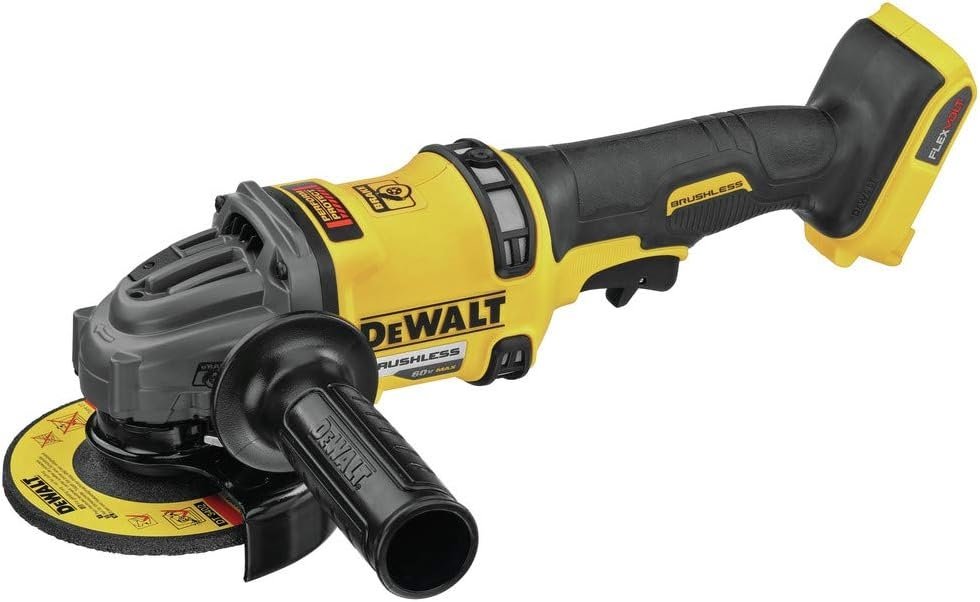
Corded-class power in a cordless grinder, rated at 13-amp equivalent with up to 2,300 max watts out. It handles wheels up to 6" for deeper cuts and long grinding sessions, but it requires FLEXVOLT 60V MAX batteries.
Introduction
I bought my DeWalt DCG416 at $154 and the DCG418 at $179.
A $25 difference made the 418 look like the obvious pick to me: more power, a bigger wheel, and not much more money.
That reasoning is how I ended up with a grinder I can’t power, or with a battery bill several times larger than the tool.
The 416 and 418 aren’t two trim levels of one product.
They run on different battery systems and are built for different kinds of work, and the sticker price hides most of the real difference.
This article works through the problems people actually face when choosing between them, in the order they tend to come up.
Table of Contents
Quick TL;DR:
If you already own 20V MAX batteries and don’t own FLEXVOLT batteries → the DCG416 is almost certainly the better buy. The 418 would mean buying into a new, pricier battery system.
At-a-glance: DeWalt DCG416 vs DCG418
| Features | DCG416 | DCG418 |
|---|---|---|
| Battery platform | 20V MAX (can also use FLEXVOLT batteries) | 60V MAX FLEXVOLT only |
| Wheel size | 4.5" – 5" | 4.5" – 6" |
| No-load speed | 9,000 RPM | 9,000 RPM |
| Power class | Compact cordless; gains power on FLEXVOLT battery | 2,300 max watts out, 13A corded-equivalent |
| Speed control | Variable speed (6 settings) | Not promoted as a feature in the listings reviewed |
| Switch style | Paddle switch | Trigger-style grip |
| Safety | Kickback Brake + E-CLUTCH | Kickback Brake + E-CLUTCH |
| Weight | About 3.9 lbs (bare tool) | Heavier; check current DeWalt spec |
| Where To Buy | Check On Amazon | Check On Amazon |
The Small Price Gap: Why Is This Still a Huge Debate?
When you look at the price tag for the bare tool alone, these two grinders cost almost the same amount of money.
So why do people argue about which one to buy?
Because buying a cordless tool is only half the story.
The real cost comes down to the batteries sitting on your workshop shelf.
I took both grinders into the shop for a week of real work—cutting thick steel pipes, smoothing out rough welds, and slicing through concrete blocks. Here is what happened the moment I picked them up:
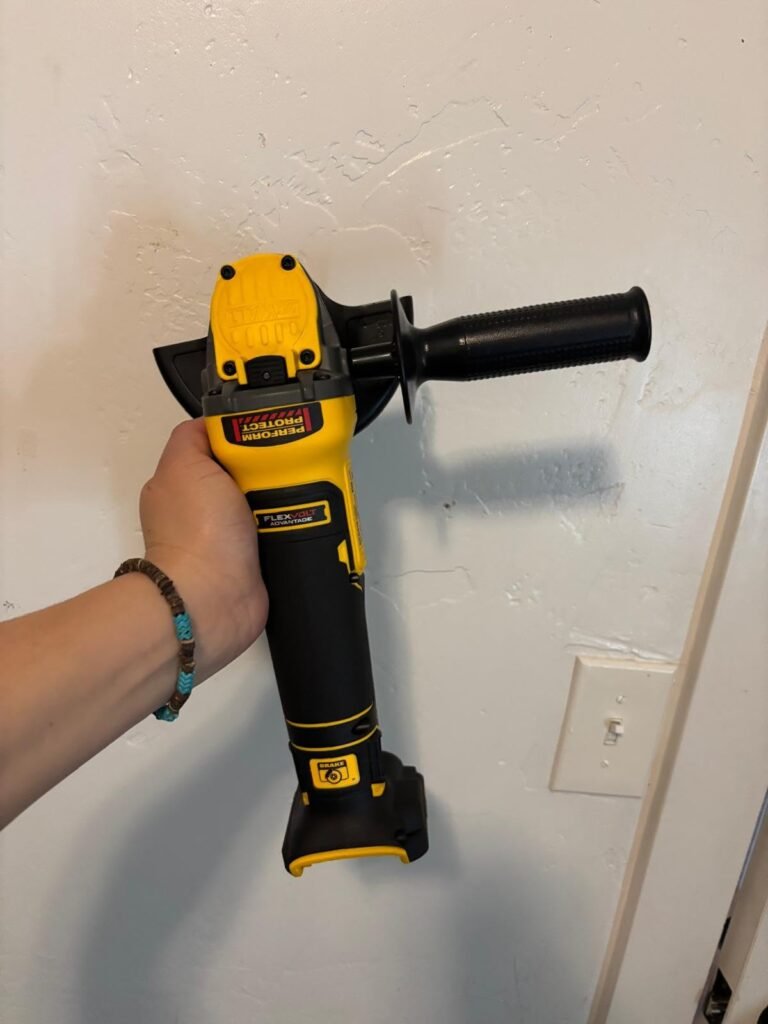
- The DCG416 (FlexVolt Advantage): I snapped in a regular 20V battery that I normally use for my drill and impact driver. The tool fired right up and easily sliced through sheet metal and steel bars. When I needed a little extra push for heavy cutting, I put a bigger FlexVolt battery into it, and it gave me a noticeable boost in power. It works with almost every standard DeWalt battery you already own.
- The DCG418 (60V MAX FlexVolt): This tool is a pure beast, but it comes with a strict rule: it ONLY works with 60V FlexVolt batteries. When I tried sliding in a standard 20V pack from my tool bag, it did not fit or turn on at all.
Why the Battery Choice Changes Everything?
During testing, the DCG418 easily cut through thick steel faster than the DCG416. Its safety brake kicked in fast, stopping the spinning wheel right away when I let go of the trigger.
However, running out of battery power mid-job revealed the hidden issue:
- If you already own DeWalt 20V tools: You can grab any extra battery from your bag and keep working with the DCG416.
- If you buy the DCG418: You must use specialized FlexVolt batteries. If you don’t already own them, a single spare FlexVolt pack and dedicated high-output charger will end up costing you far more than the small price difference between the two tools themselves.
Is the DCG416 Too Weak for Real Work?
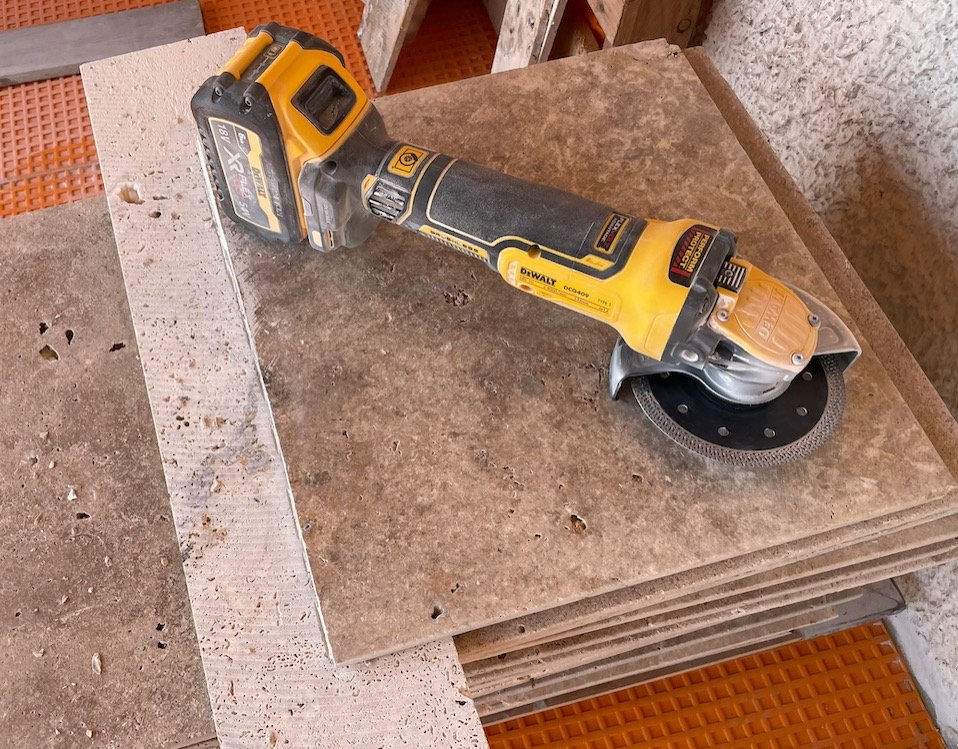
Many buyers worry that choosing the DCG416 means settling for a weaker tool, which drives them toward the heavy-duty DCG418 instead.
The truth isn’t a simple yes or no—it depends on the kind of work you do every day.
The DCG418 was built to replace heavy corded grinders that plug straight into a wall outlet.
It puts out raw muscle—about 2,300 watts of power, matching a strong 13-amp corded tool, and gives you around 30 percent more power than older 60V models.
It handles the tough jobs without slowing down. Slicing through thick steel bolts, grinding heavy welds flat, or shaping metal plates feels effortless because the motor keeps spinning fast even when you press down hard.
On the other hand, the DCG416 is a lighter, compact grinder designed for everyday work like cutting rebar, smoothing rough metal edges, and clean-up tasks.
Its main trick is FLEXVOLT Advantage technology. When you pop in a standard 20V battery, it runs like a solid everyday tool.
But when you snap in a bigger FLEXVOLT battery, the internal sensor detects it and unleashes up to 48 percent more power, giving you extra boost right when you need to cut through a tough piece of metal.
So, is the DCG416 too weak? Not at all for normal construction and shop projects.
It only feels underpowered if you are doing constant, heavy industrial grinding all day long—the kind of work where only the raw strength of the DCG418 can keep up without stopping.
Do You Really Need the 6-Inch Wheel?
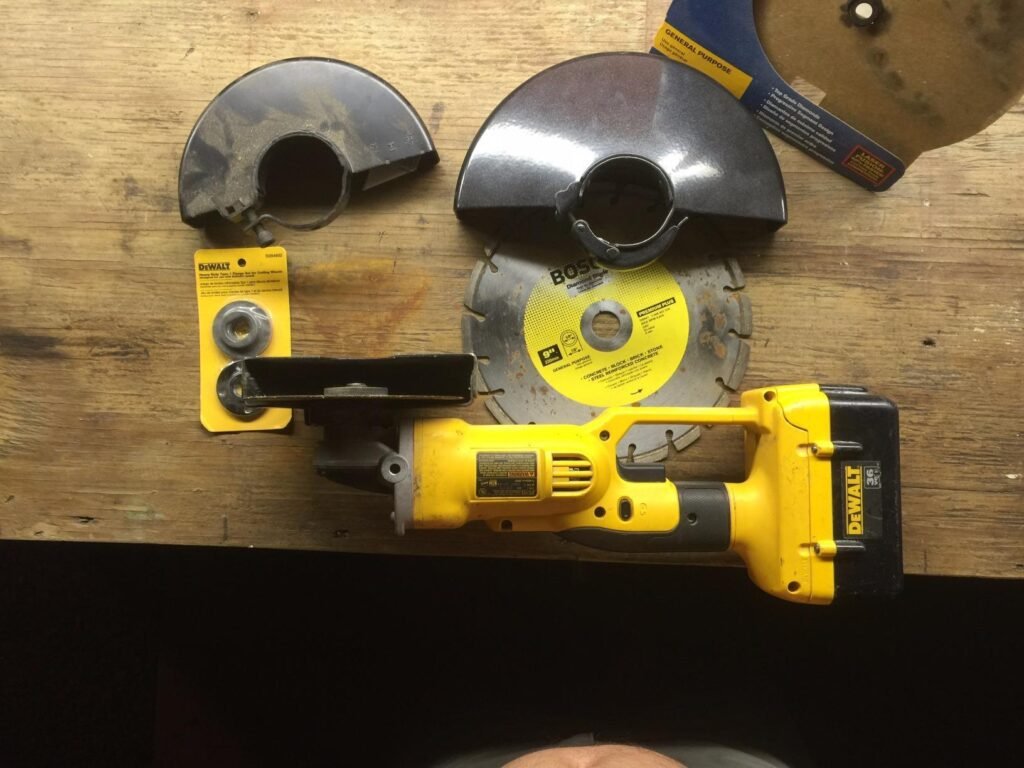
When you line up these two grinders, physical size is the first big difference you notice.
The DCG416 tops out at a 5-inch wheel, while the heavy-duty DCG418 can hold a larger 6-inch wheel.
To see if that extra inch actually makes a difference on the job, I took both tools into the shop and put them through identical testing scenarios.
I started by slicing through thick steel posts and solid concrete blocks.
This is where the 6-inch wheel on the DCG418 showed its real strength.
That extra size lets the blade reach deeper into the material, allowing me to make deep cuts in a single pass without having to flip the work piece over.
When smoothing down wide steel plates, the bigger wheel also covered more surface area at once, saving me time and wearing down much slower than smaller blades.
During heavy cutting, the tool sliced through hard steel and masonry without slowing down or straining the motor.
However, real work also taught me a practical lesson about daily use.
For most quick cutting and grinding tasks—like trimming rebar or clean-up work—I found myself reaching for standard 4.5-inch blades on both grinders.
The smaller setup is easier to handle, lighter on your arms, and fits much better into tight spots.
Will It Be Comfortable, and Will It Keep Me Safe?
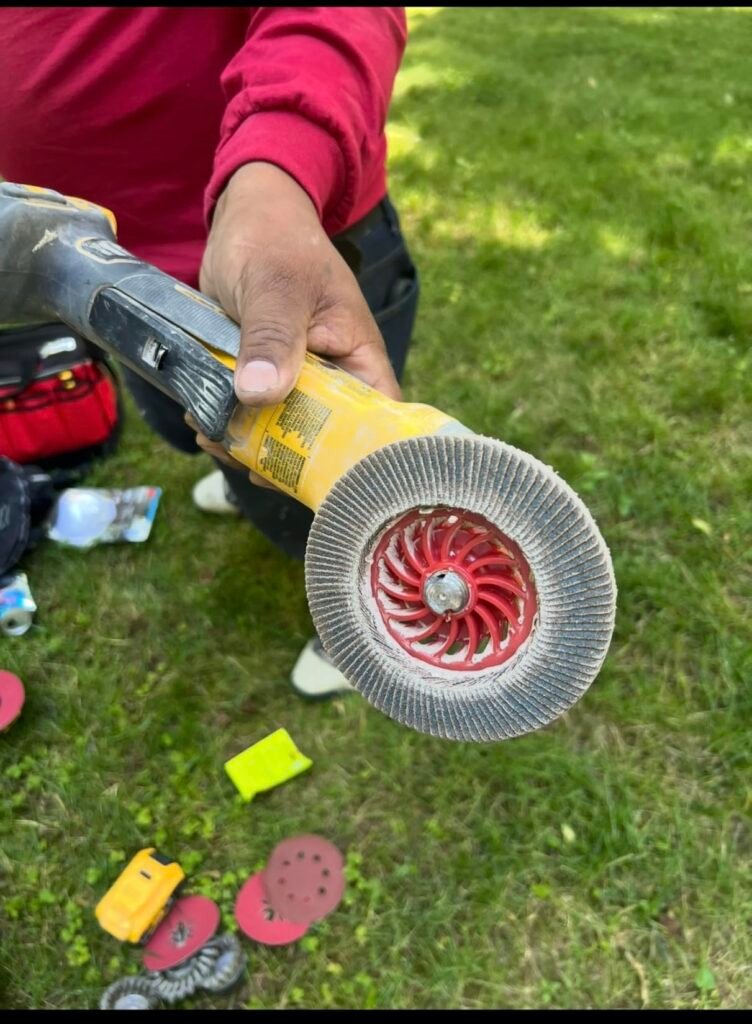
When you work with a tool that spins a sharp metal disk at thousands of turns per minute, comfort and safety matter just as much as raw power.
The great news from testing both grinders is that you do not have to compromise your safety no matter which model you choose.
Both the DCG416 and the DCG418 come equipped with DeWalt’s top-tier PERFORM & PROTECT safety systems.
I deliberately put extra pressure on a metal cut to simulate a common dangerous moment: a pinched wheel.
The moment either tool sensed the spinning disk binding up in the metal cut, the built-in E-CLUTCH instantly cut off power to the motor in less than a fraction of a second.
At the exact same time, the automatic Kickback Brake kicked in, bringing the fast-spinning wheel to a dead stop almost right away.
This prevents the grinder from violently kicking back toward your hands or chest.
How Do They Feel in Your Hands?
Holding both grinders side-by-side makes it clear that they handle very differently.
The DCG416 is lighter and easier to swing around all day.
It uses a long paddle switch that feels completely natural to squeeze and hold, giving you total control no matter how you grip the body.
The biggest feature on the DCG416 is its six-step variable speed dial.
This speed control proved to be a total game changer. When cutting or heavy grinding, you can turn it up all the way.
But when I switched to cleaning up delicate stainless steel—which burns and turns blue under high heat—dialing down the speed kept the metal cool and clean.
Lower speeds also made using wire brushes, tile blades, and polishing pads much safer, stopping the tool from jumping around or tearing up sensitive materials.
On the flip side, the DCG418 uses a drill-style trigger grip instead of a paddle switch.
The main handle is slim, which gives you a tight, secure hold when working at awkward overhead angles or squeezing into tight spots.
Even if you normally prefer a paddle switch, the comfortable shape helps you control all that raw power.
However, the extra muscle of the DCG418 comes with extra weight.
Once you lock in a large FLEXVOLT battery, the entire setup feels significantly heavier in your hands.
It feels solid and planted when grinding heavy metal on a workbench, but your arms will definitely feel the weight after holding it up for long periods.
Which One Should You Buy?
Choosing between these two grinders comes down to what you already own and the type of work you do every day.
Buy the DCG416 if:
- You already own a stack of standard DeWalt 20V batteries and don’t want to spend extra money on new packs.
- You need a lighter tool for daily tasks like cutting rebar, trimming pipe, or cleaning up welds.
- You want variable speed control for delicate jobs like polishing, tile work, or brushing stainless steel.
A compact brushless grinder that runs on standard 20V MAX batteries and gets a power boost from FLEXVOLT packs. Six speed settings suit grinding, brushing, and polishing, and Kickback Brake and E-CLUTCH add protection if a wheel binds.
Buy the DCG418 if:
- You cut thick steel beams, deep concrete slabs, or heavy masonry on a daily basis.
- You need the deeper cutting reach and extra coverage of a 6-inch wheel.
- You already own FlexVolt batteries and need pure corded-like power for non-stop industrial work.
Corded-class power in a cordless grinder, rated at 13-amp equivalent with up to 2,300 max watts out. It handles wheels up to 6" for deeper cuts and long grinding sessions, but it requires FLEXVOLT 60V MAX batteries.
Final Verdict
Think of these two tools as a dependable everyday vehicle versus a heavy-duty work truck.
The DCG416 is the smart, flexible choice for 90% of trade workers and DIYers because it adapts to the batteries you already own and gives you precise control over a wider variety of delicate tasks.
You should only step up to the DCG418 if your regular workday involves relentless, high-load demo work where saving every possible second on deep steel or concrete cuts justifies carrying a heavier tool and investing in a high-voltage battery setup.
Choose the tool that matches your daily workload—not just the biggest number on the box.
Related Articles:
FAQs
Q1. Can the DCG418 use 20V MAX batteries?
No. It requires FLEXVOLT 60V MAX batteries.
Q2. Can the DCG416 use FLEXVOLT batteries?
Yes. FLEXVOLT batteries work in 20V MAX tools, and the DCG416’s FLEXVOLT Advantage feature draws extra power from them.
Q3. Which has more power?
The DCG418, which is rated for 13-amp corded-equivalent performance.
Q4. Which is better for beginners or occasional use?
The DCG416 is lighter, cheaper to equip, and has variable speed, which makes it more forgiving for general use.
Q5. Do both have kickback protection?
Yes. Both have Kickback Brake and E-CLUTCH.