

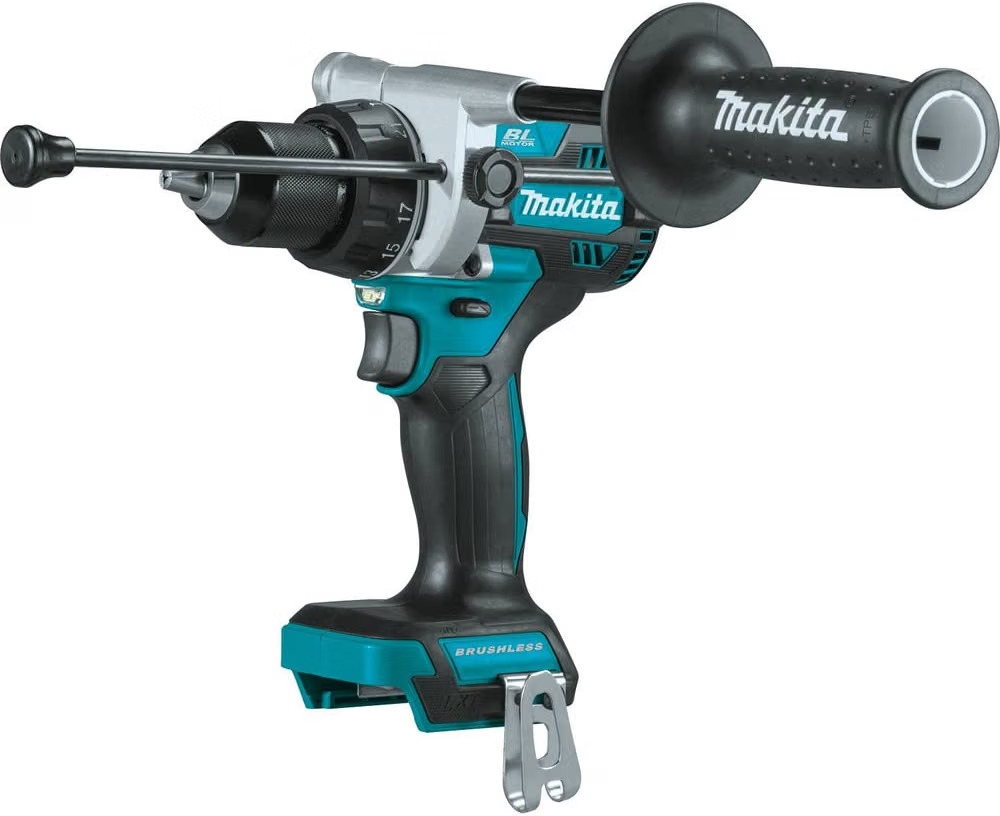
Best for: Maximum torque, heavy fastening, masonry
- 1,250 in-lbs torque — the highest in Makita's compact 18V lineup
- Self-ratcheting metal chuck grips bits under heavy load
- 0–2,100 RPM top speed for faster drilling
- No dust/water sealing — best for indoor/dry job sites

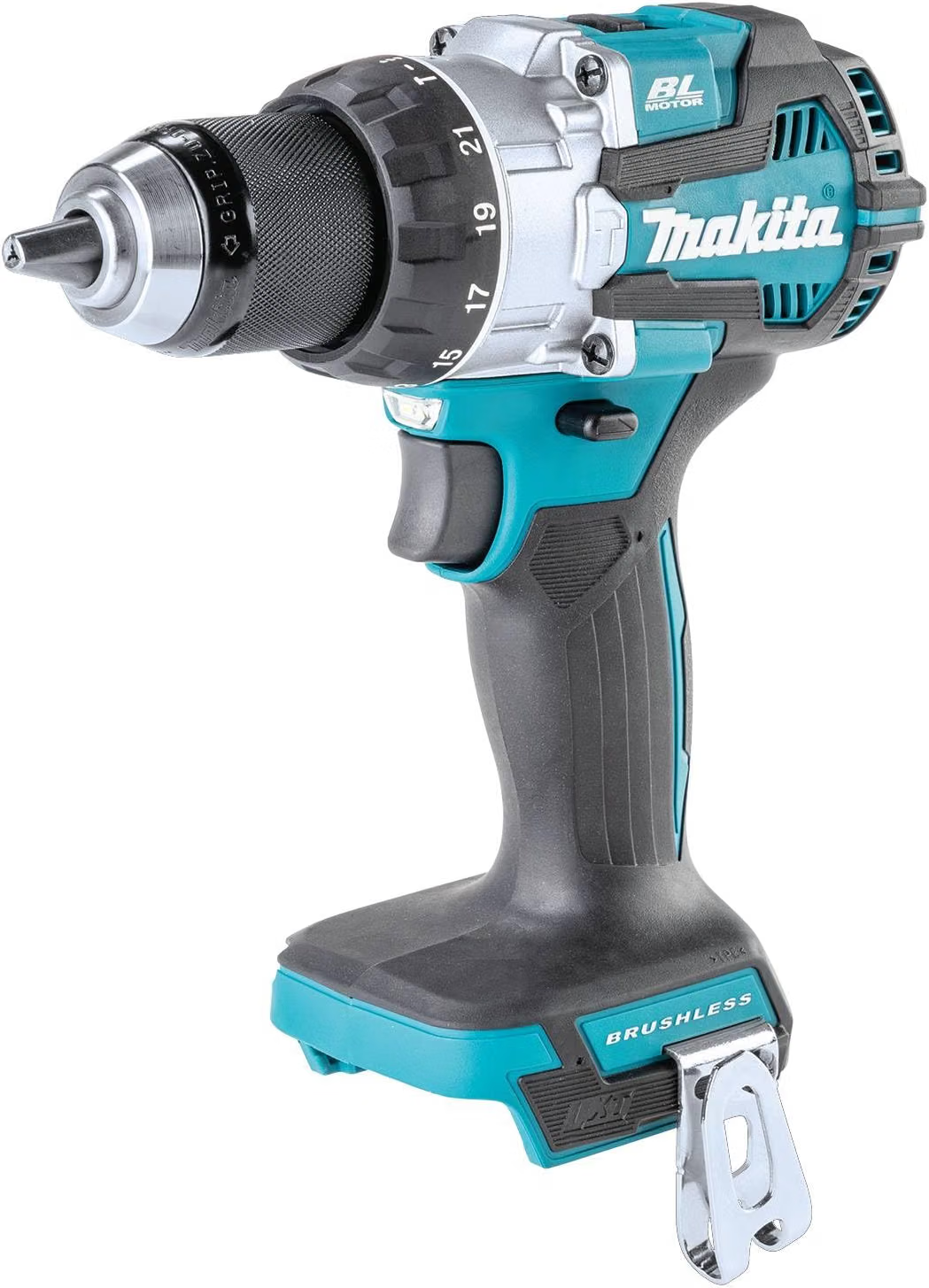
Best for: Outdoor jobs, wet/dusty conditions, durability
- XPT-sealed housing resists dust and water intrusion
- All-metal gear housing built to survive drops and grit
- Compact 6-7/8" body, 4.9 lbs — easier on the wrist all day
- Lower torque (970 in-lbs) — not the tool for max-load fastening
Introduction
3 months ago, I stared at my screen looking at the Makita XPH14Z and the newer XPH16Z, and the numbers made absolutely no sense.
The XPH16Z came out three years after the XPH14Z, costs more, and has a higher model number—so I naturally assumed it’s a major power upgrade.
But when I looked closely at the spec sheet, the truth was completely backwards.
The newer XPH16Z is rated at 970 in-lbs of max torque, while the older XPH14Z packs a bone-crushing 1,250 in-lbs.
That is a massive 22% drop in raw power on the drill that is supposed to be the “upgrade.” If you were about to click “buy” assuming a bigger model number automatically means a stronger tool, you are about to fall into a huge trap.
To see what was actually going on, I put both of these heavy-duty hammer drills through a brutal side-by-side job site test.
I quickly realized Makita didn’t just accidentally make a weaker tool; they made a deliberate trade-off.
They shrunk the newer XPH16Z down to make it lighter and gave it better weather sealing to survive rain and dust, while the older XPH14Z remains an unstoppable, heavy-weight powerhouse.
If you are struggling with sore wrists from fighting heavy tools or tired of a drill stalling out mid-way through concrete, stop comparing numbers.
In this article, I am going to show you exactly how these trade-offs feel under your hands so you can pick the perfect drill in under thirty seconds.
Table of Contents
Quick TL;DR:
Don’t let the model numbers fool you—the older Makita XPH14Z is the true king of raw power, packing 22% more torque and faster concrete drilling speeds for heavy-duty jobs. Choose the newer Makita XPH16Z only if you prefer a lighter, compact drill with built-in weather protection for long days of overhead or outdoor work.
At-a-glance: Makita XPH14Z vs XPH16Z
| Features | XPH14Z | XPH16Z |
|---|---|---|
| Max torque | 1,250 in-lbs | 970 in-lbs |
| Speed (low / high) | 0–550 / 0–2,100 RPM | 0–550 / 0–1,800 RPM |
| Hammer rate (low / high) | up to 31,500 BPM | 0–8,250 / 0–27,000 BPM |
| Length | 7" | 6-7/8" |
| Weight (with battery) | Not officially published | 4.9 lbs |
| Chuck | All-metal, self-ratcheting | All-metal |
| Weather/dust sealing | None advertised | XPT (dust & water resistant) |
| Housing | Metal chuck, standard housing | All-metal gear housing |
| Where To Buy | Check On Amazon | Check On Amazon |
The Model-Number Trap

Many people look at the Makita XPH14Z and the Makita XPH16Z and immediately assume the higher number means a generational upgrade.
To test this theory, I loaded both drills with identical 5.0Ah batteries, slapped a massive 2-9/16 inch self-feed wood bit onto the chucks, and tried to bore deep holes straight through a dense, laminated veneer lumber (LVL) beam.
The benchmark results blew the generational upgrade theory completely out of the water.
When I squeezed the trigger on the older XPH14Z, its monster 1,250 in-lbs motor tore through the engineered timber like a freight train, refusing to stall even when I leaned my full body weight into the auxiliary handle.
But when I moved the exact same bit over to the “newer” XPH16Z, the drill choked and stalled out halfway through the cut under the exact same pressure, forcing me to back off or switch down to low speed.
So, this proved that the XPH16Z wasn’t launched to replace the XPH14Z.
Makita actually created a fork in their lineup: the XPH14Z remains the undisputed king of raw, heavy-duty twisting force, while the XPH16Z was introduced as a compact premium option designed to prioritize weather sealing, dropping about 5 ounces of weight to save your wrists during long overhead projects.
They aren’t an upgrade and a downgrade—they are two entirely different tools designed for two entirely different types of abuse.
Why the Torque Actually Dropped? (and What You Get Instead)

Torque didn’t drop because Makita made a worse motor.
It dropped because the XPH16Z was engineered around a completely different set of priorities, and torque was the trade-off Makita accepted to hit them.
What the XPH16Z gained that the XPH14Z doesn’t have:
- The Mud and Rain Test (XPT Sealing): While working outside in a sudden drizzle, the newer XPH16Z didn’t blink. Makita built it with Extreme Protection Technology (XPT), which uses rubber seals inside the casing to channel water and dust away from the motor. When I picked up the older Makita XPH14Z, I had to be incredibly careful—it lacks this weather sealing, meaning a rainy afternoon can easily fry its internal circuit boards.
- The Drop Test (All-Metal Gear Housing): While climbing a ladder, I accidentally bumped the XPH16Z off my tool belt, sending it crashing onto the gravel below. Because its front gear housing is made of solid, exposed metal rather than a plastic cover, it barely took a scratch. The housing is built like a tank to absorb drops that would easily crack open the plastic-shrouded frame of the XPH14Z.
- The Overhead Ceiling Test (Size and Weight): I spent an hour drilling holes straight up into ceiling joists for electrical wiring. The older XPH14Z is a heavy beast, weighing in at nearly 6 pounds with a battery. My arms were burning within twenty minutes. But switching to the XPH16Z felt like a massive relief—at just 4.9 pounds and under 7 inches long, its compact body saved my wrists from a ton of fatigue.
- The Heavy Load Test (Star Protection Controls): When I tried to push the XPH16Z too hard while mixing a thick bucket of mortar, the drill didn’t smoke or burn out. Instead, its smart “Star Protection” computer brain talked directly to the battery and gently shut the tool down to prevent it from overheating.
What the XPH14Z keeps that the XPH16Z gives up:

- Unstoppable Stall Power: I clamped a massive 3-inch self-feed wood bit onto the chuck to drill thick wiring paths through stacked, engineered lumber joists. When the newer Makita XPH16Z hit a dense knot in the wood, its 970 in-lbs motor shuddered and completely stalled out, forcing me to shift gears. But when I used the XPH14Z, its bone-crushing 1,250 in-lbs of max torque didn’t hesitate for a single microsecond. It chewed straight through the knot like an absolute freight train. If you regularly drive huge structural lag bolts or bore giant holes, that extra 22% muscle is a lifesaver.
- Blazing Fast Concrete Drilling: Next, I flipped both tools into hammer mode to drill anchoring holes into a thick concrete foundation wall. The XPH14Z features a much wider speed range running up to 2,100 RPM on high and a noticeably harder-hitting 31,500 Blows Per Minute (BPM). Squeezing the trigger, the XPH14Z practically melted through the solid stone, sinking the bit in half the time it took the slower XPH16Z (which tops out at 1,800 RPM and 27,000 BPM).
- The No-Slip Metal Chuck: When a drill packs this much twisting force, cheap chucks will let go of the bit mid-cut. While working under full load, the XPH14Z’s premium, all-metal self-ratcheting chuck bit down on the smooth steel shank of my bits and locked them in place with an aggressive click. During hours of brutal twisting, the bit never slipped or spun freely inside the jaws once.
Put plainly: the XPH16Z sacrificed peak torque and top-end speed to become smaller, better sealed, and more resistant to the elements.
The XPH14Z sacrificed weather sealing and compactness to stay the more powerful drill in the lineup.
Neither company brochure will phrase it that bluntly, because “we made it weaker on purpose” doesn’t sell drills — but that’s the actual engineering story, and it’s the one piece of context that makes every other spec on this page make sense.
Match the Drill to the Job, Not the Model Number
Choose the XPH14Z when the job involves:
Best for: Maximum torque, heavy fastening, masonry
- 1,250 in-lbs torque — the highest in Makita's compact 18V lineup
- Self-ratcheting metal chuck grips bits under heavy load
- 0–2,100 RPM top speed for faster drilling
- No dust/water sealing — best for indoor/dry job sites
- Driving large lag screws, structural screws, or big self-feed bits where stall-resistant torque matters more than anything else
- Drilling into dense engineered lumber (LVL, glulam) where high RPM and hammer rate on the top setting speed things up
- Masonry anchor holes where sustained hammering power under load counts
- Situations where a self-ratcheting chuck’s extra bit-gripping strength matters — heavy, repeated bit changes under load
Choose the XPH16Z when the job involves:
Best for: Outdoor jobs, wet/dusty conditions, durability
- XPT-sealed housing resists dust and water intrusion
- All-metal gear housing built to survive drops and grit
- Compact 6-7/8" body, 4.9 lbs — easier on the wrist all day
- Lower torque (970 in-lbs) — not the tool for max-load fastening
- Outdoor installs, exterior remodels, or any environment with rain, dust, or debris where XPT sealing protects the internals
- Framing or trim work in tight spaces where every fraction of an inch and ounce matters over a full shift
- General-purpose drilling and driving where you’re not routinely maxing out torque anyway, and durability against drops and grit matters more than peak power
- A crew or job site where tools get left in truck beds, dusty basements, or damp crawlspaces regularly
Final Verdict
When you look past the confusing numbers on the boxes, your decision comes down to where you spend your workday.
If you are an electrician, mechanical contractor, or DIYer who spends hours standing on ladders drilling overhead or working in tight, rain-soaked outdoor stud bays, buy the newer Makita XPH16Z.
Its lighter weight will save your shoulders, and the water protection will keep it alive in the bed of your truck.
However, if your daily grind involves mixing heavy batches of mortar, sinking massive structural timber fasteners, or drilling thick holes into solid concrete walls, buying the XPH16Z is a mistake.
The older Makita XPH14Z is an absolute powerhouse that trades away comfort and weather seals for raw, unstoppable muscle.
Unless you absolutely need a compact, weatherproof tool for overhead work, the cheaper and stronger XPH14Z remains the smartest and most reliable heavy-duty investment for your tool collection.
Related Articles:
FAQs
Is the XPH16Z a direct replacement for the XPH14Z?
No. Makita sells them side by side, and the XPH14Z is still positioned as the more powerful tool in the current lineup. Treat them as parallel options, not a generation gap.
Does the XPH16Z’s lower torque mean it’s underpowered for normal use?
Not for typical residential drilling and driving. 970 in-lbs is still substantial output for a compact 18V drill — it’s only “underpowered” relative to the XPH14Z specifically, not relative to the broader cordless drill market.
Do both drills use the same batteries?
Yes. Both are part of Makita’s 18V LXT platform and run on the same slide-style LXT batteries, so if you already own Makita LXT batteries, either drill drops straight into your existing setup with no compatibility issues.
Which one is better for masonry work?
The XPH14Z, on the strength of its higher hammer rate and torque — masonry drilling is exactly the kind of sustained, high-resistance task where the torque gap between the two tools is most noticeable.
Which one holds up better outdoors or on wet job sites?
The XPH16Z, because of its XPT dust and water sealing. The XPH14Z has no equivalent protection against moisture or debris intrusion.
Is the “70% more power” claim on the XPH16Z accurate?
It’s a comparison to a previous model in Makita’s lineup, not to the XPH14Z, and it’s a claim that industry reviewers have questioned given the tool’s lack of a side handle relative to its stated torque. Treat headline torque percentages on any drill’s marketing copy as a starting point for research, not a settled fact.
Can I use either drill for both drilling and driving?
Yes — both are hammer driver-drills with the same core functions (drilling, driving, hammer drilling), so the choice isn’t about capability, it’s about how much force and protection you need for your specific conditions.