

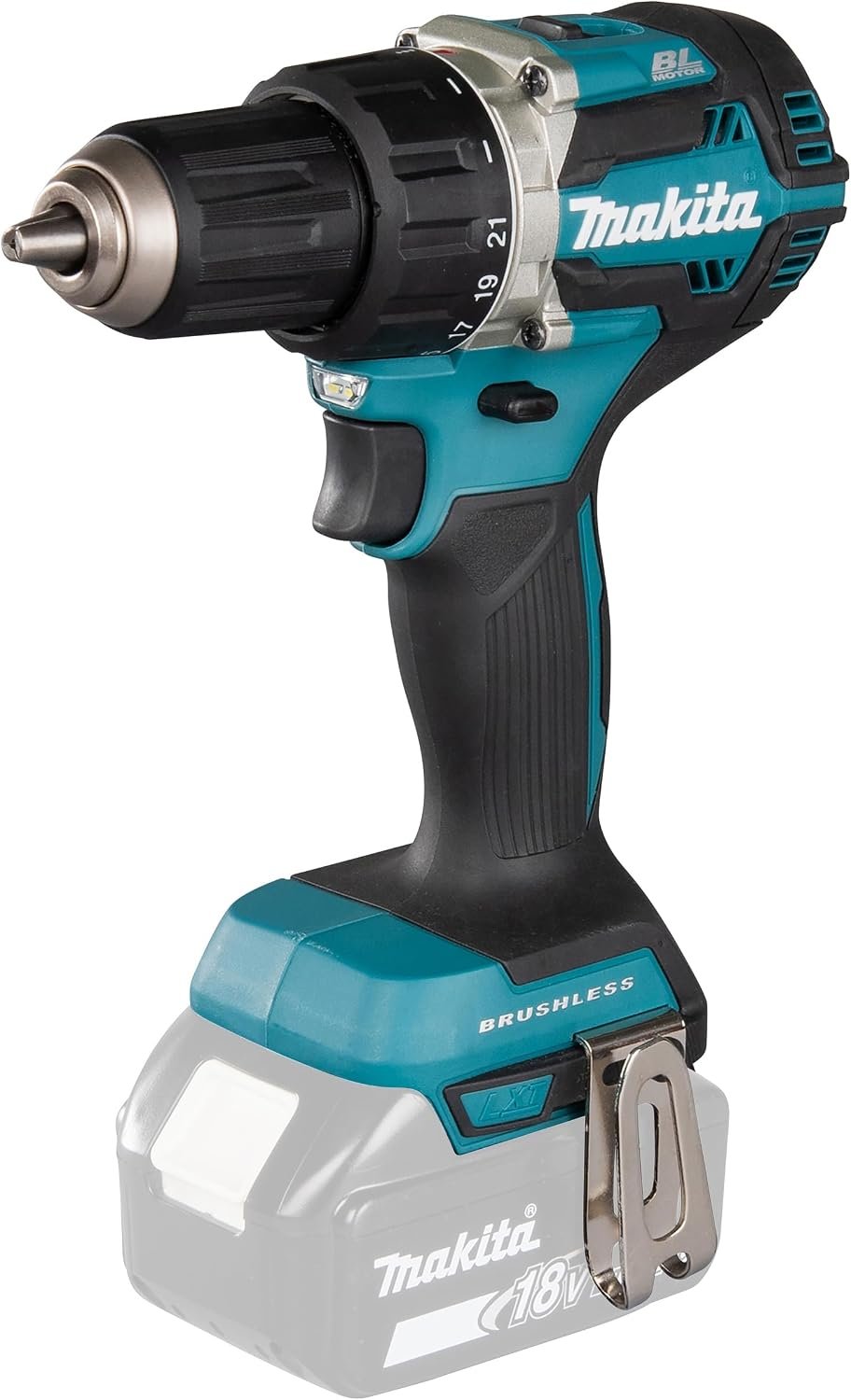
The stronger of the two, with 54 Nm of torque, 2,000 rpm top speed and a documented all-metal gear and aluminum housing build. A good all-rounder for long screws, bigger bits and everyday drilling.

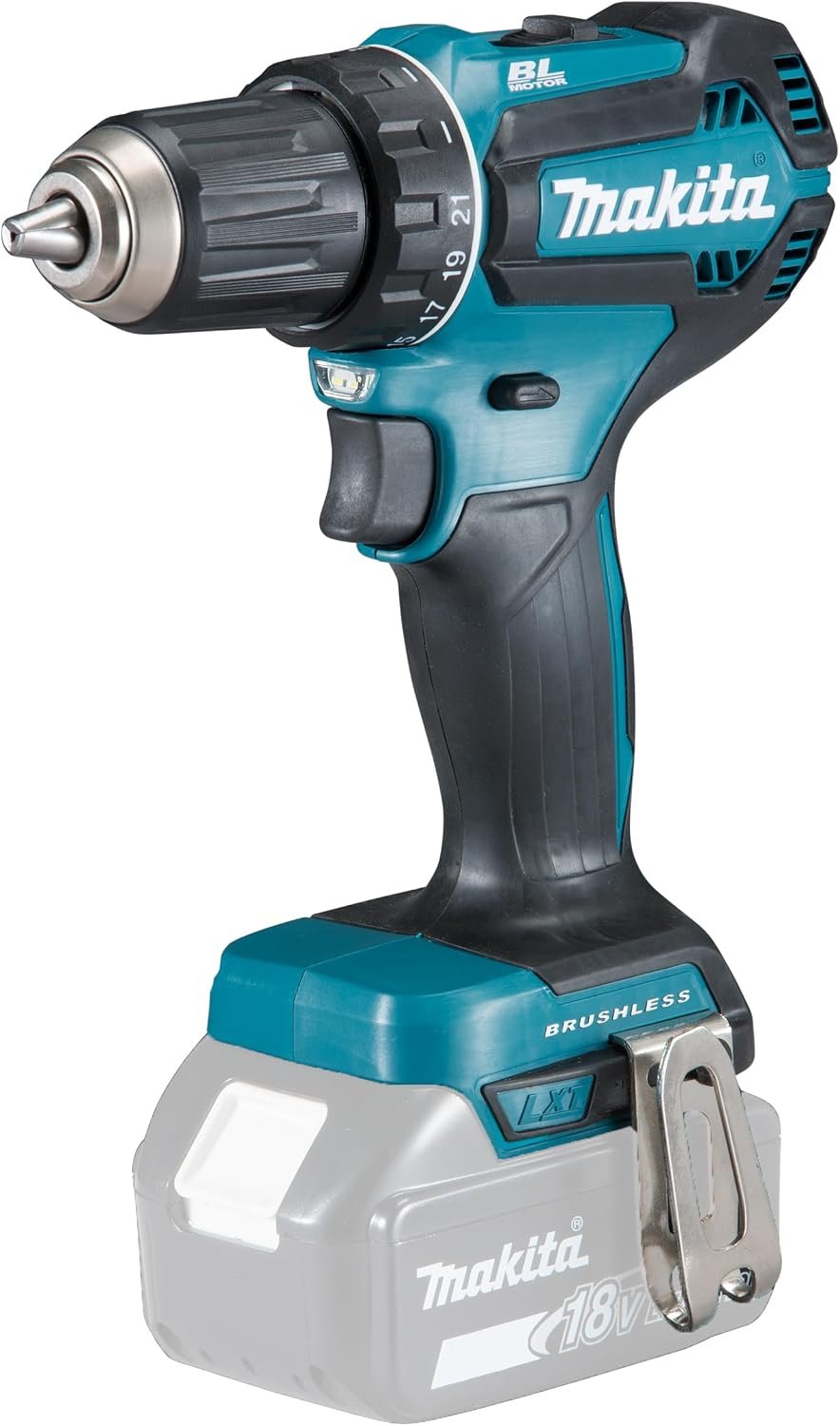
The shorter, lighter sibling (not a successor to the 484). It gives up a little torque and speed in exchange for easier handling overhead, in cabinets and between studs.
Introduction
I spent three straight days installing heavy wood cabinets in a kitchen, using my old DeWalt brushed drill, and by 3 PM every afternoon my wrist felt like it was going to snap.
It was simply too heavy, and the battery died right when I was halfway through driving long screws into hard oak.
I knew I needed to switch to a lighter, brushless Makita 18V drill, but picking the right one turned out to be trickier than I thought.
Standing in the store, I held the Makita DDF484 in one hand and the Makita DDF485 in the other.
They looked almost the same, but the DDF484 had a tough metal front end and extra muscle for drilling big holes, while the plastic-front DDF485 felt noticeably lighter and easier on my arm for overhead work.
I ended up trying both on actual job sites to see if saving a little weight was worth giving up a bit of extra power—or if that metal front gear house on the 484 was really built to take a beating.
Table of Contents
Quick TL;DR:
The Makita DDF484 is the tough, metal-geared workhorse you want for drilling big holes and driving long screws on heavy-duty job sites. The Makita DDF485 is a lighter, shorter compact drill made to save your arms during overhead drywalling and cabinet assembly. Choose the 484 for maximum power and durability, or the 485 for all-day comfort on lighter tasks.
At-a-glance: Makita DDF484 vs DDF485
| Features | Makita DDF484 | Makita DDF485 |
|---|---|---|
| Max torque (hard / soft) | 54 Nm / 30 Nm | 50 Nm / 27 Nm |
| No-load speed (high gear) | 2,000 rpm | 1,900 rpm |
| Weight | 1.12 kg | 1.05 kg |
| Motor | Brushless | Brushless |
| Gearbox | 2-speed | 2-speed |
| Torque clutch settings | 21 | 21 |
| Chuck | 13 mm keyless | 13 mm keyless |
| Max drilling (wood / metal) | 38 mm / 13 mm | 38 mm / 13 mm |
| Battery platform | 18V LXT | 18V LXT |
| Where To Buy | Check On Amazon | Check On Amazon |
The 485 Is Newer, So It Must Be Better
When I first looked at these two drills, I thought the same thing almost everyone does: “The Makita DDF485 has a bigger number, so it must be the upgraded version.” But as soon as I took both out of their boxes and put them through a full day of work, I realized how wrong that assumption was.
To test them out, I brought both drills to a job where I had to build thick wooden outdoor steps and screw heavy drywall panels onto a ceiling.
First, I picked up the Makita DDF484 to drill large 32mm holes through thick wooden studs for electrical wiring.
It powered through without slowing down or catching.
You can feel the extra weight from its metal front housing, but that weight translates into pure driving strength.
When I switched to the DDF485 for the exact same task, the difference was clear right away.
The 485 struggled on the second hole, slowed down, and I had to back off so the motor wouldn’t bind up.
Key takeaway on the job: The DDF485 isn’t a replacement for the 484—it’s built for lighter, overhead work where every ounce counts.
Where the DDF485 shines is during light, overhead tasks.
Holding it up for two straight hours to drive drywall screws into a ceiling was a breeze compared to using the heavier 484.
It is slightly shorter, lighter, and much easier on your arms when working in tight corners or above your head.
The DDF485 isn’t a newer, better replacement for the 484.
Makita made the 485 as a lighter, lower-power compact option (updating older mid-tier models like the DDF459), while keeping the older 484 as their heavy-duty workhorse.
Would I Even Feel 4 N·m?
On paper, the difference is tiny—just 4 N·m of torque.
Before I used them, I wondered if anyone would even notice a tiny gap like that in real life.
So, I put both drills to work on everyday tasks first.
Driving standard two-inch screws into soft pine, drilling small pilot holes, and putting together heavy wooden frames felt exactly the same.
Both drills sank screws quickly and smoothly without any trouble.
If you are only doing normal household jobs or basic shop work, you honestly cannot feel any difference between them.
The real test came when I started building a heavy outdoor deck using thick, dense hardwood post timber.
I grabbed 4-inch structural timber screws and drove them straight in without pre-drilling.
That is where that 4 N·m difference actually shows up:
- With the DDF485: About three-quarters of the way in, the motor started to groan. I had to lean my entire body weight into the back of the drill to keep it driving, and on the last inch, it stalled out completely. I had to back it out and finish the drive in low gear.
- With the DDF484: It definitely had to work hard, but it kept chugging along. That little bit of extra muscle kept the bit turning all the way until the screw head sat flush with the wood.
You won’t feel that extra power when mounting shelves or driving drywall screws.
But the second you push a large spade bit or drive long lag screws into tough wood, the 484 keeps going right where the 485 gives up.
I Work Overhead And In Cramped Spots. Does The 485 Actually Help?
If you spend most of your workday (like me) reaching inside tight kitchen cabinets or holding a drill over your head to fix ceiling joists, every tiny millimeter and gram starts to matter.
I tested both tools specifically in these awkward spots to see if the DDF485 actually makes your life easier.
First, I measured the physical size.
The DDF485 is shorter than the DDF484 by just 3 millimeters—about the thickness of two stacked coins.
When I was squeezing the drill between tight wall studs to drive pocket screws, that tiny difference was barely noticeable.
If a bit won’t fit with the 484, those 3 millimeters on the 485 usually won’t save you either. You still need a right-angle attachment for really tight spots.
Where I felt the biggest surprise during testing was the weight, but not in the way most people think:
- The Bare Tool Difference: Holding both drills in my hands without batteries, the DDF485 feels just a tiny bit lighter—roughly the weight of a small handful of screws.
- The Battery Realization: The moment I slapped a big, heavy 5.0Ah battery onto the DDF485, it immediately felt top-heavy and bulky overhead.
- The Real Secret: Switching to a slim 2.0Ah compact battery on the DDF484 made it feel significantly lighter in my hand than the 485 loaded with a heavy 5.0Ah battery pack.
Which One Is Built Better?
When you hold both drills in your hands, the build quality difference isn’t something you need a lab test to see—you can literally feel it in the front of the tool.
The DDF484 instantly feels like a tool built for a harsh job site.
The whole front gear housing is made of solid, die-cast aluminum metal.
When I was using it outdoors and accidentally knocked it off a waist-high workbench onto concrete, it just took a small scratch on the casing and kept working without a hitch.
Inside, that metal housing holds full-metal planetary gears, which keeps the gears aligned even when you lean hard on the drill.
The DDF485 takes a different approach.
Instead of metal up front, the 485 uses a hard plastic housing to save weight.
It feels solid enough for DIY use, but it definitely feels lighter and less rugged when bumped around in a tool bag.
Makita does not advertise an all-metal gearbox for the 485 the way they do for the 484.
It still has smooth metal gears inside for driving, but the outer casing is clearly built for weight reduction rather than taking heavy impacts.
Which One You Should Buy?
Buy the Makita DDF484 if:
- You drill big holes with spade bits or hole saws into tough timber.
- You drive long structural screws and need extra driving power.
- You work on rough job sites where your tools get bumped, dropped, and beaten up.
The stronger of the two, with 54 Nm of torque, 2,000 rpm top speed and a documented all-metal gear and aluminum housing build. A good all-rounder for long screws, bigger bits and everyday drilling.
Buy the Makita DDF485 if:
- You mostly do overhead drilling, fixing ceilings, or lightweight drywall work.
- You build furniture, assemble cabinets, or do general home repairs.
- You want a lighter, slightly shorter tool that won’t tire out your arm by the end of the day.
The shorter, lighter sibling (not a successor to the 484). It gives up a little torque and speed in exchange for easier handling overhead, in cabinets and between studs.
Final Verdict
Think of the DDF484 as your heavy-duty muscle car that willingly takes on tough, punishing tasks without sweating, while the DDF485 is your nimble daily commuter that spares your shoulders and keeps arm fatigue away during long overhead days.
If your daily work demands raw force and job-site survival, pay the tiny weight penalty for the metal-geared 484; if speed, light handling, and comfort are what keep you productive, let the 485 lighten your load.
Related Articles:
FAQs
Q1. Is the DDF485 a replacement for the DDF484?
No. The evidence points to it being a compact sibling with slightly lower torque and speed, not a successor. Makita appears to list both.
Q2. Is the DDF484 brushless?
Yes. Retailer and catalog listings both describe the DDF484 as brushless, and the DDF485 is too.
Q3. Do they use the same batteries?
Yes. Both run on Makita’s 18V LXT platform, and catalog listings show compatibility with the same range of packs.
Q4. Which is better for occasional home use?
Either will do the job. The 484’s extra power margin helps if you ever tackle bigger fasteners. The 485’s smaller body helps in cramped spots.
Q5. Is the difference between 54 Nm and 50 Nm noticeable?
For most household and light trade work, probably not. It shows up mainly at the limits: long screws, large bits, and sustained heavy use.
Q6. Which one should I buy at $197 versus $194?
At that gap, the DDF484 is the default pick unless you specifically want the smaller, lighter body.