

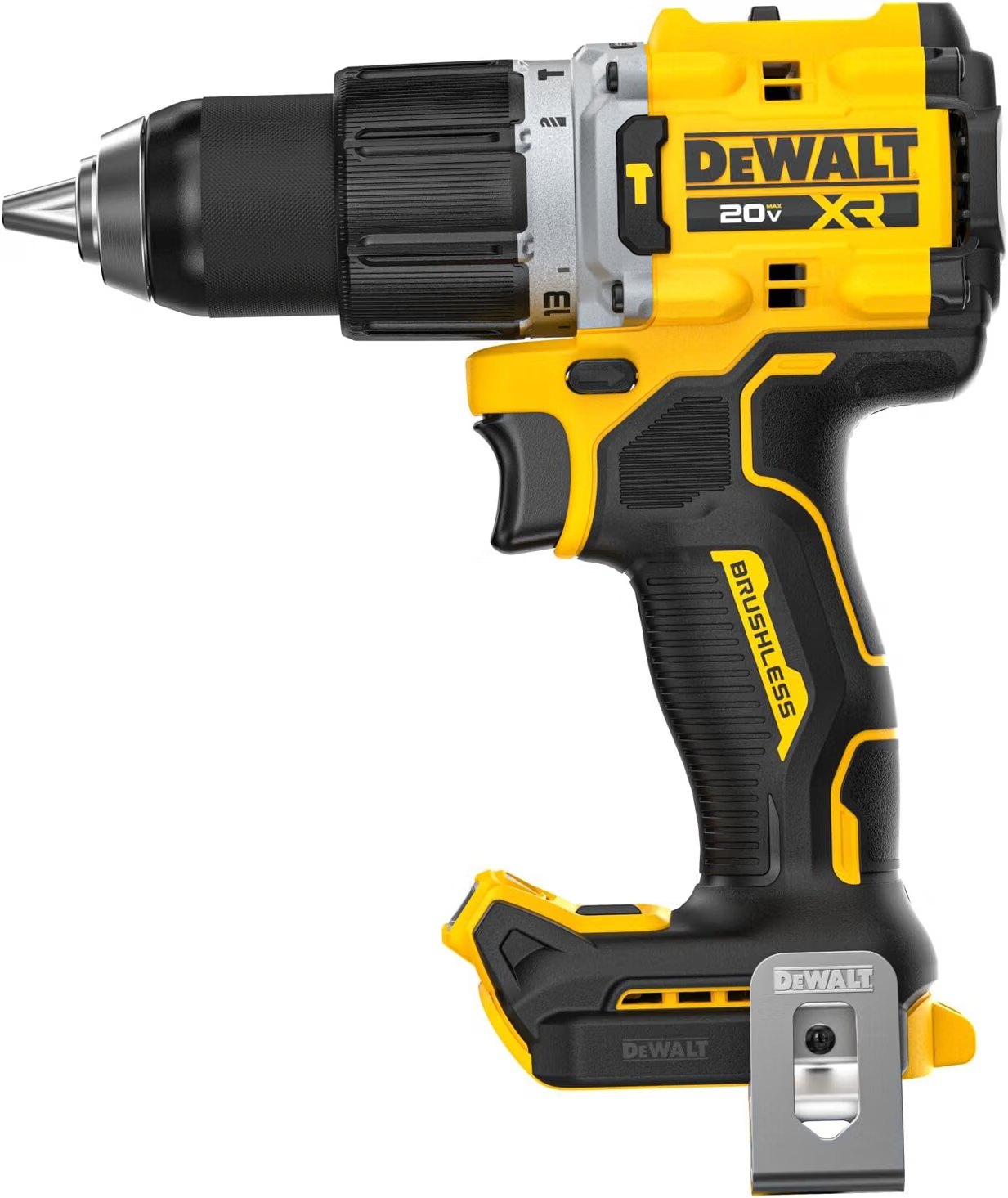
Does everything the DCD801 does plus masonry drilling — and currently costs less. The default pick unless your work is strictly light-duty fastening.

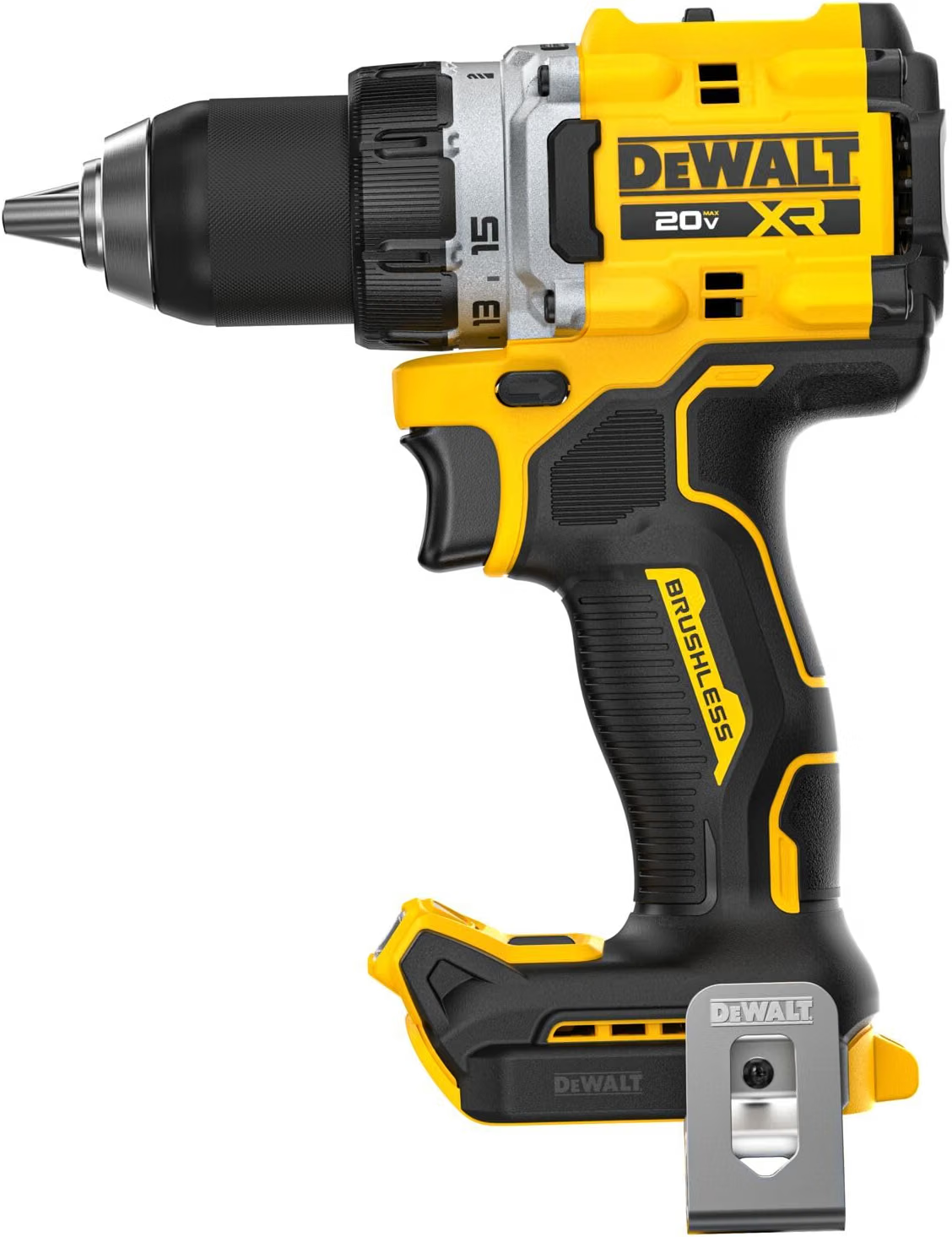
A simpler two-speed drill/driver built for general assembly, drywall, and furniture work — no hammer function, no unnecessary bulk.
Introduction
Amazon prices sometimes make completely no sense.
Right now, the plain DeWalt DCD801 drill/driver is listed at lower price, while its big brother, the DeWalt DCD806 hammer drill—the one built with the extra concrete-crushing mechanism—is sitting at higher price.
That is completely backwards.
Hammer drills are almost always more expensive, so seeing the “upgraded” model costing less means there is a wild pricing window happening today that turns the normal rules of tool shopping upside down.
To see if there was a catch, I bought both, set them up on my workbench, and ran a series of side-by-side drilling benchmarks.
While the price today makes this look like an open-and-shut case, my hands-on testing revealed two massive secrets.
One is a frustrating design quirk in how the DCD806 behaves when you force it under real, heavy drilling pressure, and the other is a hidden battery mistake that can completely choke the power of either drill, no matter which one you choose.
If you want to know why anyone would pay more for less right now, and what these drills actually feel like when you are twisting your wrist under a heavy load, stick around—because the numbers on the box are hiding the real story.
Table of Contents
Quick TL;DR:
The DCD806 hammer drill is currently cheaper than the plain DCD801 drill/driver despite doing more — so unless you’re doing delicate finish work only, the DCD806 is the safer default buy right now. The only catches: its anti-rotation safety system can trip mid-hole with large bits, and neither drill hits its marketed power without the right battery pack.
At-a-glance: DeWalt DCD801 vs DCD806
| Features | DeWalt DCD801 | DeWalt DCD806 |
|---|---|---|
| Hammer Function | No | Yes (~28,000+ BPM) |
| Speed Settings | 2-speed (600 / 1,200 RPM) | Variable (0–1,200 RPM) |
| Max Power | 1,050 MWO | 1,050 MWO |
| Top Speed | 2,000 RPM | 2,000 RPM |
| Length | Shorter (~0.5" less) | Slightly longer |
| Anti-Rotation System | Yes | Yes (trips more often w/ large bits) |
| Best For | Fastening, light drilling, tight spaces | Masonry, concrete, finish work needing speed control |
| Warranty | 3-yr limited | 3-yr limited |
| Where To Buy | Check On Amazon | Check On Amazon |
The Price Doesn’t Match the Spec Sheet: Flipping the Script

To figure out if there was a hidden catch to this weird pricing, I took both drills out to my workshop and ran a side-by-side comfort and layout test.
Normally, you expect to pay a premium for a hammer drill.
But right now, the plain DeWalt DCD801 driver actually costs more than the upgraded DeWalt DCD806.
I weighed them on my scale and checked their sizes, thinking maybe the plain drill was much smaller or lighter to justify the higher cost. It wasn’t.
The hammer drill is barely a fraction of an inch longer and feels almost identical in your hand, so you aren’t making a size sacrifice to get the lower price.
This completely flips the traditional advice you read online.
Most generic reviews tell you to “only buy a hammer drill if you absolutely need to drill into concrete” because they assume the extra feature will cost you a lot more money.
But since the extra feature is actually the cheaper option today, the question changes completely: is there any scenario where you would regret not having that concrete-crushing mode?
During my test, I installed a gate anchor into a brick pillar.
Having that built-in hammer mode on the cheaper drill meant I could swap out the bit and blast straight into the brick without a single worry.
The only exception I found was fine, detailed carpentry.
When I was assembling a delicate pine jewelry box, the extra gears inside the hammer drill drivetrain created a tiny bit of extra vibration.
If you only do fine cabinetry or furniture, the smoother, plain drill still makes sense—even if it costs a bit more. But for everyone else doing home repairs, the extra muscle is essentially free right now.
Speed Range Isn’t Just a Number: Where Your Work Gets Saved
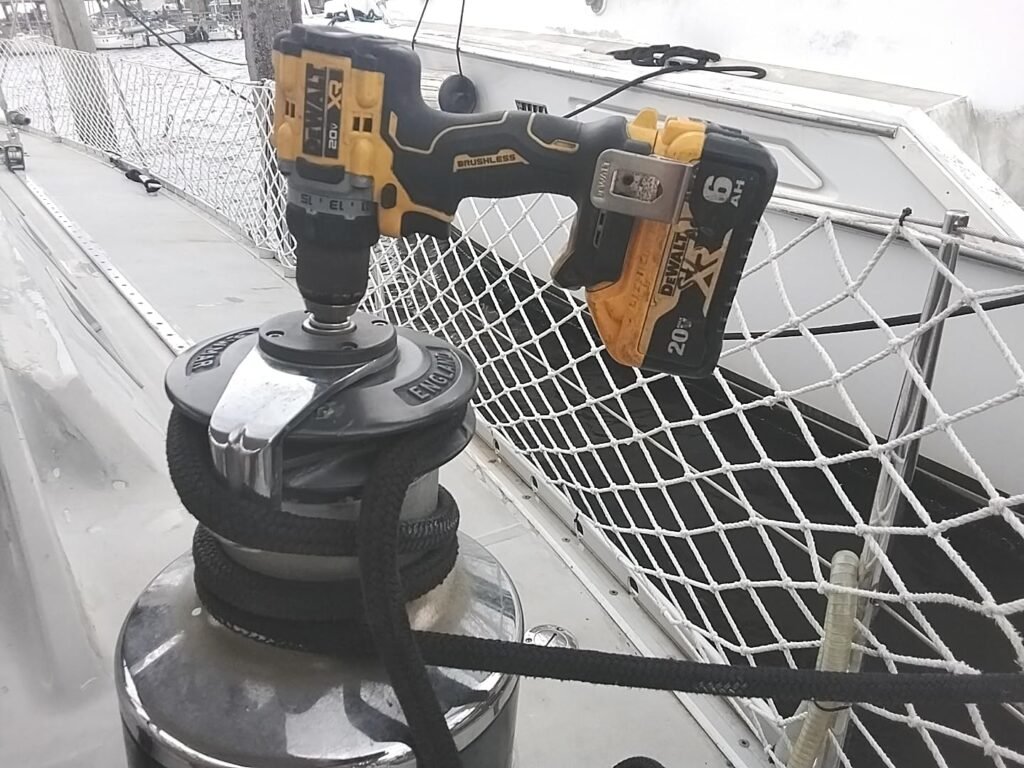
To see how these different speed setups feel under real pressure, I grabbed a sheet of brittle tile backer board and a delicate piece of oak trim to run a control test.
The spec sheet notes that the DeWalt DCD806 has a highly adjustable, granular speed range, while the plain DeWalt DCD801 uses a basic two-speed gearbox.
When I sat down to work, that technical difference became an immediate make-or-break reality.
I started by trying to sink a screw into the oak trim with the plain drill.
Because its gearbox only gives you two wide zones, I felt completely trapped.
The low speed felt too sluggish to bite into the hardwood, but clicking it into the high speed made the drill spin so fast that it instantly slipped, gouging the wood and splitting my expensive trim right down the middle.
It asks your finger to perfectly feather a jumpy trigger with zero safety net.
But when I moved over to the hammer drill, the experience was night and day.
Its wide, smooth speed range let me dial in the exact middle ground I needed.
I was able to start the screw at a slow, rock-solid crawl to bite into the brittle backer board, and then smoothly accelerate just enough to drive it home without cracking the material.
It felt incredibly natural and controlled.
If you are just drilling messy holes into framing studs, you won’t care about this difference.
But if you are doing finish work, cabinetry, or anything where a single mistake will ruin your project, the granular speed control on the hammer drill is a absolute lifesaver.
The Feature Nobody Mentions Until It Interrupts Your Work
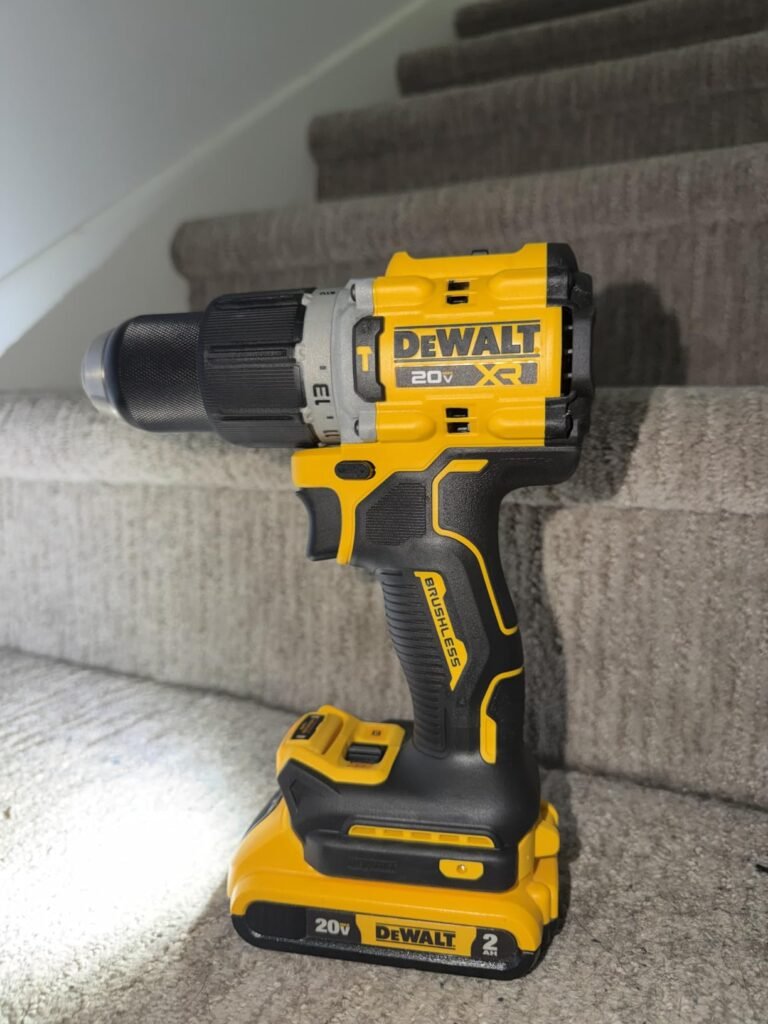
To see how these drills handle dangerous situations, I put on a pair of heavy work gloves, loaded a massive 2-inch spade bit into the chuck, and tried to drill straight through a thick, knotted piece of framing timber.
Both of these tools come with DeWalt’s built-in Anti-Rotation system.
It is a smart computer sensor that automatically cuts power if the bit catches and tries to violently twist your arm off.
While testing the DeWalt DCD806, I discovered a very annoying real-world quirk.
As my large spade bit cleared out the wood chips, the resistance naturally spiked.
Even though I had a rock-solid, two-handed grip on the tool and it wasn’t twisting at all, the aggressive safety sensor panicked, thought I was losing control, and instantly shut off the motor mid-hole.
It happened three times on a single piece of wood! It isn’t a broken tool or a defect, but DeWalt tuned the safety brain to be incredibly sensitive.
If you regularly bore massive holes with hole saws or auger bits, you will need to slow down and learn exactly where the drill’s safety limits sit so it stops cutting out on you.
On the other hand, the plain DeWalt DCD801 was completely seamless.
Because it is a lighter-duty tool generally meant for standard screws and smaller drill bits, it rarely hits that extreme resistance threshold.
It isn’t that the safety system is different, it’s just that the plain drill’s daily work doesn’t accidentally trigger the aggressive computer brain.
If your weekly project list involves massive plumbing or electrical hole-cutting, this sensor quirk won’t be a dealbreaker, but it is definitely something you should expect rather than be shocked by mid-project.
The Battery You Pick Might Matter More Than the Drill You Pick
To see how much battery choice actually affects power, I hooked up both tools to a few different DeWalt battery packs from my workshop and ran a heavy drilling test.
What I discovered is a hidden secret that completely undercuts the numbers on the box.
DeWalt actually measured all their flashy marketing power specs using a very specific performance battery pack (the DCB2104) that they don’t even sell by itself right now.
Here is what that looked like when I put my hands on the tools:
- The Old Battery Slump: When I slid an older, lower-capacity 20V MAX battery onto the base of the hammer drill, the tool felt sluggish and stalled out much faster when drilling into tough materials. It wasn’t a defect in the drill itself; the tool simply couldn’t draw enough power from the older battery generation to hit its true potential.
- The New Kit Advantage: When I switched over to a fresh kit battery that came bundled with the tool, both the plain drill and the hammer drill immediately woke up, delivering a massive burst of extra speed and torque.
This hidden rule applies equally to both the DeWalt DCD801 and the DeWalt DCD806.
If you are buying a bare tool to save cash because you already own some DeWalt batteries, just understand that your older packs might leave a lot of real performance on the table.
More Powerful” Is Doing a Lot of Heavy Lifting in DeWalt’s Marketing
To see if the “upgraded” model was actually a stronger tool, I set up a heavy-duty boring test by driving thick 2-inch screws into a solid fir beam with both drills.
DeWalt’s marketing often hints that the DeWalt DCD806 is a flat-out power upgrade, but the numbers on the box state they both share the exact same 1,050 MWO (max watts out) and a 2,000 RPM top speed.
Squeezing the triggers back-to-back, my hands proved the spec sheet right: in standard drilling and driving modes, these two tools feel absolutely identical because they use the exact same brushless motor platform.
The only real differences that showed up during my hands-on testing were minor design trade-offs:
- The Hammer Mode (DCD806 Only): Flipping the collar on the DCD806 unleashes a concrete-crushing 28,000+ BPM (blows per minute). This hammer function is the entire mechanical difference—it is an extra setting for stone and brick, not a general power boost for regular wood or metal.
- The Size Trade-off: Because it has to house those extra internal hammer gears, the DCD806 is about half an inch longer than the plain DeWalt DCD801. It’s a tiny physical difference, but you will definitely notice it if you are crammed inside a tight kitchen cabinet trying to drill a pocket hole.
This identical motor power also explains why that aggressive anti-rotation safety sensor cuts out so much more often on the DCD806.
The hammer mechanism naturally introduces violent vibration spikes when slamming into concrete, which tricks the drill’s computer brain into thinking you’ve lost control.
If someone tells you to buy the DCD806 because it’s simply a “stronger” everyday drill, they are falling for the marketing hype.
You should buy it purely because you want the ability to drill into concrete, not because you expect it to twist your arm any harder on normal wood projects.
Which One Should You Actually Buy?
Buy the DeWalt DCD806 if:
Does everything the DCD801 does plus masonry drilling — and currently costs less. The default pick unless your work is strictly light-duty fastening.
You want a complete, do-anything tool for home repairs and renovations. Because it is currently the cheaper option, you get the concrete-crushing hammer mode essentially for free—giving you a massive power safety net whenever you need to drill into brick, stone, or concrete blocks.
Buy the DeWalt DCD801 if:
A simpler two-speed drill/driver built for general assembly, drywall, and furniture work — no hammer function, no unnecessary bulk.
You work strictly with delicate materials, fine woodworking, or tight spaces. It is worth paying a tiny bit extra for this model because its simpler drivetrain produces less internal vibration, its body is half an inch shorter for tight cabinets, and its safety sensors won’t constantly cut out on you.
Final Verdict
When you strip away the confusing online prices, your final choice comes down to a smart, long-term choice about internal mechanics, not motor muscle.
Because these two drills share the exact same motor platform, choosing the DeWalt DCD806 gives you a more complex, heavy-duty gear set designed to take violent pounding against solid brick walls.
However, if you are a precision builder who primarily works on wood workshops or delicate craft benches, that extra hammer gear assembly inside the tool is just dead weight that creates tiny, micro-vibrations through the chuck.
If you choose the DCD801, you are investing in a cleaner, more stable rotation path that keeps drill bits spinning perfectly straight without any safety computer interruptions.
Unless your weekly chores actively involve drilling anchors into concrete foundations, buying the simpler, shorter DCD801 is the more precise engineering choice that will actually deliver cleaner, chip-free finishes on your woodworking projects.
Related Articles:
FAQs
Q: Can I add hammer function to the DCD801 later?
No — it’s a physical gearbox difference, not upgradeable.
Q: Does hammer mode hurt normal drilling on the DCD806?
No — it only activates when switched on; otherwise it drills like a standard driver.
Q: Which one is better for concrete or brick?
Only the DCD806 can drill masonry — the DCD801 physically can’t.
Q: Why is the “upgraded” DCD806 cheaper?
Current Amazon pricing, not a permanent rule — check live prices before buying.
Q: Do I need a special battery for full power?
No, but DeWalt’s rated specs assume a specific battery tier — older packs may underperform slightly.