

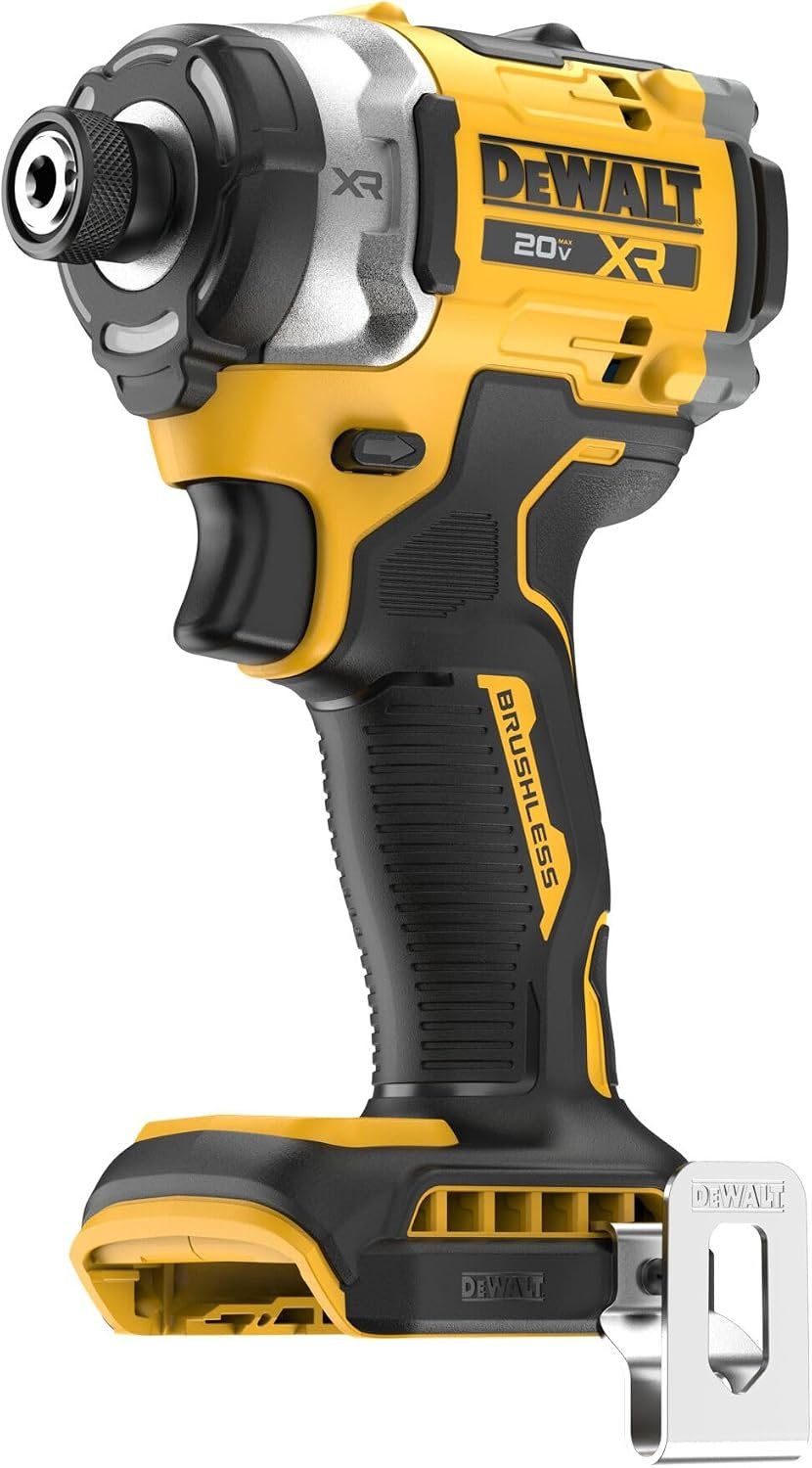
The perfect daily driver for 95% of jobsite tasks. Exceptionally lightweight to eliminate overhead wrist fatigue, extremely battery-efficient, and smooth enough for delicate cabinet, decking, and general carpentry work.
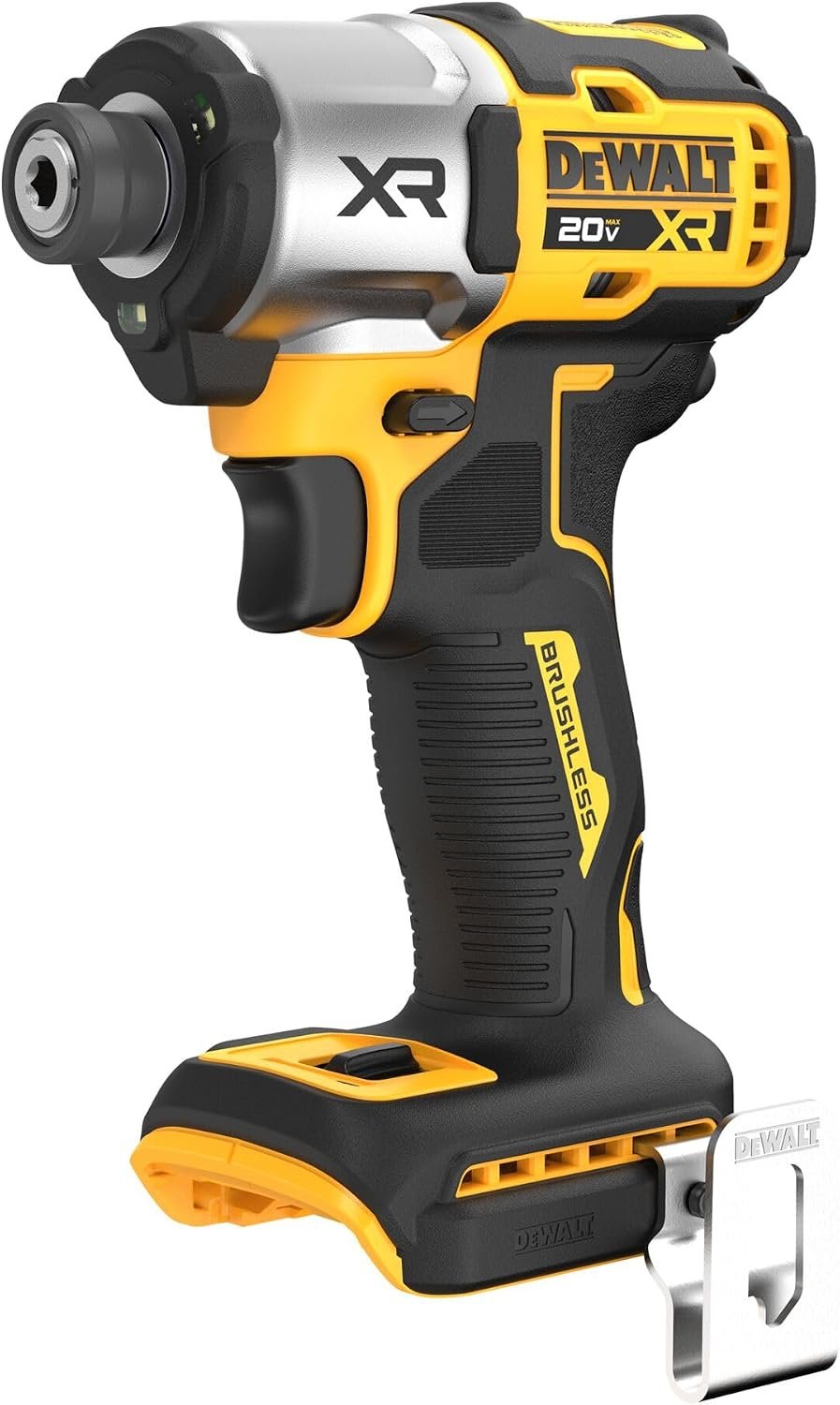

Built for raw power and tough materials. Features specialized speed modes designed for self-drilling Tek screws, a ultra-short head for tight stud bays, and unmatched driving speed for heavy structural fasteners.
Introduction
I remember standing in my garage last month, staring at a thick stack of wet pressure-treated wood.
I was trying to drive a row of long structural screws into a heavy oak workbench using my old driver, but halfway through, the motor just bogged down, whining like it wanted to quit.
That frustrating moment of getting stuck right in the middle of a weekend project made me realize I needed a serious upgrade.
I kept hearing about how easily the DeWalt DCF845 handles everyday tasks without wearing out your hand, but then everyone online wouldn’t stop talking about the raw, beast-like speed of the newer DCF860 and its bright new ring of lights.
Torn between wanting a smooth, comfortable tool for general building and craving that massive, unstoppable power to punch through stubborn hardwoods without a single stutter, I ended up getting both to put them through real-world testing side by side.
Table of Contents
TL;DR
The DCF860 used to cost $50 more than the DCF845 — now it’s just $18. That changes everything. If you drive self-drilling screws, work in tight spaces, or do heavy-duty fastening, spend the extra $18 and get the DCF860. If your work is mostly wood, overhead, or general DIY, the DCF845 is still the smarter, lighter, more efficient buy.
AT-a-glance: DeWalt DCF845 vs DCF860
| Features | DeWalt DCF845 | DeWalt DCF860 |
|---|---|---|
| Max Torque | 1,825 in-lbs | 2,500 in-lbs |
| Max Speed (RPM) | 3,400 RPM | 3,800 RPM |
| Impact Rate (IPM) | 4,200 IPM | 4,500 IPM |
| Tool Weight (Bare) | 2.0 lbs | 2.7 lbs |
| Head Length | 5.1 inches | 4.8 inches |
| Work Light | 3-LED Ring | 9-LED Ring (with 20-min spotlight mode) |
| Speed Modes | 3 Speed Modes | 3 Speed Modes (Tuned for Tek/Self-Drilling Screws) |
| Target User | General Contractors, Cabinet Makers, Deck Builders | HVAC Techs, Steel Framers, Heavy Structural Builders |
| Where To Buy? | Check On Amazon | Check On Amazon |
You’re Choosing Between Two Different Tools Built for Different Jobs.
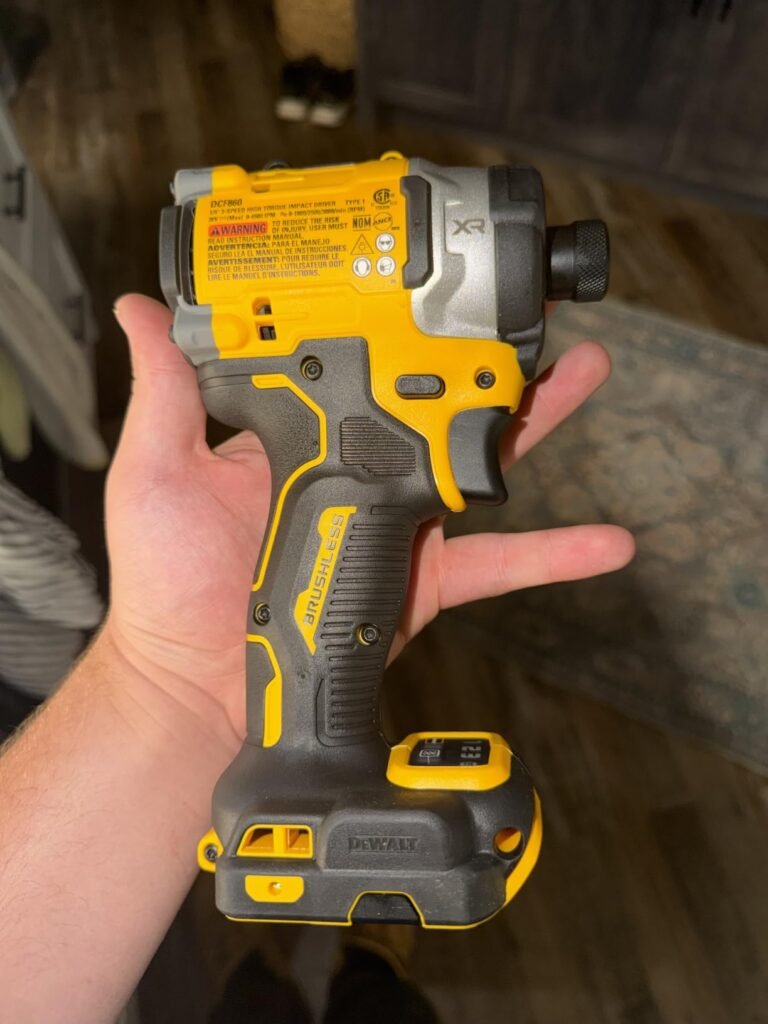
When you actually use these tools on a real job, you quickly realize you are not just looking at two different power levels; you are holding two completely different tools built for separate tasks.
Spending a full day testing them side by side shows that the DeWalt DCF845 is your smooth, steady partner for everyday building.
With 1,825 in-lbs of torque and 3,400 RPM, it feels light and balanced in your hand.
When building backyard decks, putting together cabinets, or running standard wood screws all afternoon, the DCF845 just works smoothly without wearing out your wrist.
It handles about ninety-five percent of normal carpentry work easily, letting you drive fastener after fastener with great control.
Switching over to the DeWalt DCF860 changes the whole feel of the work.
Testing it out on heavy framing and metal installation shows why it is the heavy-duty flagship.
Pumping out a massive 2,500 in-lbs of torque and 3,800 RPM, it has raw, wild power that punches through thick, stubborn materials without a single stutter.
Working inside tight spaces like narrow electrical boxes or between crowded wall studs, its shorter 4.8-inch head length makes a huge difference compared to the 5.1-inch DCF845.
More importantly, when driving self-drilling metal screws into steel studs or HVAC ductwork, the optimized speed settings on the DCF860 keep the bit from slipping off or spinning wildly, biting cleanly into the metal right away.
That kind of real-world control is what separates a standard tool from a specialized heavy worker.
The Weight Problem Nobody Wants to Talk About
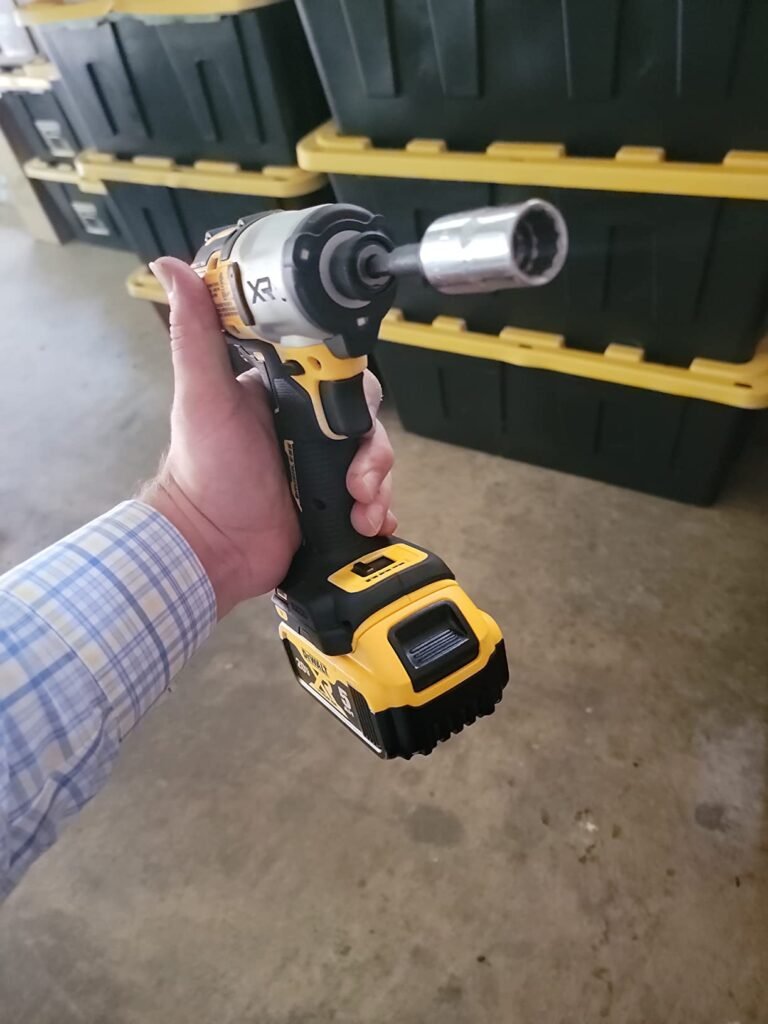
There is an honest, uncomfortable truth about the DCF860 that most fanboys completely ignore: it is 35% heavier than the DCF845.
On paper, 2.7 pounds compared to 2.0 pounds sounds like a tiny difference you would barely notice.
But real life on a jobsite is not a paper sheet.
I learned this lesson the hard way while hanging heavy upper kitchen cabinets and running electrical boxes above my head.
By the sixth hour of continuous work, holding that extra tool weight up in the air turned into a slow, burning ache in my wrist, forearm, and shoulder.
Driving screw after screw into high ceiling joists, every extra ounce starts to feel twice as heavy.
That extra weight is not just a detail on a box; it directly changes how your body feels at the end of a long workday.
When working at waist height or down on a workbench—like building decks or driving big structural bolts—the heavier DCF860 feels totally fine because gravity is on your side.
But the second you raise your arms overhead for extended periods, the lighter DCF845 becomes an absolute lifesaver.
The Self-Drilling Screw Problem

Driving self-drilling screws—often called Tek screws or self-tappers—is a completely different beast than driving standard wood screws.
Instead of pulling smoothly into soft timber, a metal screw has to drill its own clean hole through sheet metal before the threads can grip.
If your impact driver hits too hard or spins too wildly, the bit pops out, the metal surface gets scratched, or you strip the screw head entirely before it even seats flush.
I tested this firsthand while securing heavy sheet metal ductwork and running light-gauge steel framing.
When using standard impact drivers, you constantly have to lean all your body weight into the tool just to keep the bit from slipping off and ruining the job.
This is exactly where the DCF860 blew me away.
DeWalt tuned the speed modes on this tool specifically for metal work.
It isn’t just turning down the power; the motor adjusts its timing so the screw bites into the steel smoothly without jumping out of the slot.
When working on metal roofs, ductwork, or steel studs, that controlled power saves you from ruining endless fasteners and wasting time.
If all you do is drive wood screws into deck boards and lumber, this special feature won’t mean much to you.
But if you spend your days joining metal sheets, this extra control makes the tool worth every single extra penny.
The Battery Life Reality Check

Since both tools run on DeWalt’s standard 20V MAX battery platform, you do not have to worry about buying new chargers or different packs.
But what you will definitely notice on the jobsite is how fast each tool eats through power.
The DCF860’s motor is a hungry beast—because it packs so much raw torque and speed, it draws noticeably more power out of the battery when it gets squeezed under a heavy load.
I put this to the test on a long afternoon driving structural lag screws into thick pine posts and running rows of deck screws.
Using identical, fully charged 5.0 Ah batteries in both drivers, the DCF845 just kept going long after the DCF860’s battery indicator dropped down to its last bar.
When you are forcing the motor to push through hard materials minute after minute, the DCF845 is simply much smarter with its power.
Now, if you are just driving short drywall screws or doing quick fixes around the house, you won’t notice much of a difference between the two.
But if you are out on a jobsite with only one or two batteries in your bag, that extra runtime matters.
The DCF860 gets the work done faster per screw, but the DCF845 lets you keep working longer without stopping to hunt for an open wall outlet to recharge.
So Which Should You Actually Buy?
Buy the DeWalt DCF845 If:
- You do standard woodworking and general building: If your daily work involves driving wood screws, building outdoor decks, installing cabinets, or general household remodeling, the DCF845 is the smarter pick.
- You value light weight and wrist comfort: At just 2.0 lbs, it is easy on your joints during long workdays, especially when working overhead.
- You want maximum battery life: It uses significantly less power, giving you more runtime out of every battery pack.
- You want the best bang for your buck: It handles ninety-five percent of everyday jobsite tasks at a lower cost.
The perfect daily driver for 95% of jobsite tasks. Exceptionally lightweight to eliminate overhead wrist fatigue, extremely battery-efficient, and smooth enough for delicate cabinet, decking, and general carpentry work.
Buy the DeWalt DCF860 If:
- You work heavy trades and metal: If you are an HVAC tech, metal building contractor, or steel framer driving self-drilling Tek screws into steel daily, the custom speed modes make it worth every penny.
- You deal with tough materials and tight spots: If you consistently drive thick structural timber screws or work inside tight, crowded stud bays where every fraction of an inch counts, its shorter 4.8-inch head and 2,500 in-lbs of torque will save you time.
- Raw speed and brute power are your top priorities: If you do not mind carrying a little extra weight in exchange for a tool that refuses to slow down, this flagship monster gets high-load jobs done faster.
Built for raw power and tough materials. Features specialized speed modes designed for self-drilling Tek screws, a ultra-short head for tight stud bays, and unmatched driving speed for heavy structural fasteners.
The Verdict: What the $19 Actually Buys You
The DCF845 is an excellent impact driver for the vast majority of fastening applications.
It always was, and that hasn’t changed.
If you can genuinely use the DCF860’s specific advantages — self-drilling screw optimization, shorter head, higher torque, the 9-LED ring — the upgrade now costs less than a tank of gas.
It’s not even a question.
If those advantages don’t map to your actual work, the DCF845 is still the better choice.
Not because it’s cheaper, but because more tool than you need is still the wrong tool — and the DCF845 is exactly the right tool for general fastening, delivered at a price that respects your budget.
Related Articles:
- Makita DDF484 vs DDF485
- Milwaukee 2903 20 vs 2904 20
- DeWalt DCD996 vs DCD1007
- DeWalt DCD801 vs DCD806
- Makita XPH14Z vs XPH16Z
- Makita XDT13Z vs XDT14Z
FAQs
Q: Which is better for a beginner or DIYer?
DCF845. It’s lighter, easier to control, and more than powerful enough for home projects.
Q: Is the DCF860 worth the extra $18?
Only if you’ll actually use what it offers — self-drilling screws, tight spaces, or heavy fastening. Otherwise, no.
Q: Which drains batteries faster?
DCF860. More torque = more current draw. DCF845 gives you longer runtime per charge.
Q: Can either drive lag screws?
Both can. DCF860 does it with less effort. DCF845 handles it fine with a good run-up.
Q: Which is better for overhead work?
DCF845 — it’s 0.7 lbs lighter, and that difference is very real after a few hours above your head.
Q: Do they use the same batteries?
Yes. Both run on DeWalt’s 20V Max XR platform. Fully interchangeable.